The Czech energy market is currently shifting. ČEZ dynamic tariff rewards everyone who shifts large appliances – including wallboxes – to predetermined hours. In the noon window between 11:00 and 13:59, the commercial price of electricity drops by half. At a time when a kilowatt-hour is usually sold for around four crowns, such a discount can reduce the fuel for an electric car to a level cheaper than the traditional night rate.
Why is the discount timed for noon?
Photovoltaic power plants produce the most electricity in the middle of the day. During sunny hours, there is often a surplus of energy and wholesale prices fall. Suppliers therefore look for ways to quickly consume this „cheap“ electricity instead of curbing the output of power plants. ČEZ thus pursues the same goal as Britain’s Octopus Energy, which with its tariff Intelligent Octopus Go sells night-time electricity for just seven pence per kWh.
How does an EV driver save money in a model case?
Imagine a compact electric car with consumption of 15 kWh/100 km and a monthly mileage of 1,000 km. The owner needs roughly 150 kWh. If eighty percent of charging is scheduled into the noon band, the discount applies to 120 kWh. At a price of 4.10 CZK per kWh, the bill drops by about 250 crowns per month, that is by three thousand a year. Anyone who charges even more at home saves higher amounts. And the bonus? The discount applies to the entire household, so it also makes laundry, the dryer or the water heater cheaper. This is a best-case model – it assumes you manage most of your charging during the noon discount of −50 % and is based on an indicative price of around 4.10 CZK/kWh. ČEZ states that the real average saving in testing was around 10 %; the discount of up to −50 % applies only during certain hours.
What do you need for the tariff?
ČEZ bills consumption in fifteen-minute intervals, so the metering point must have a smart meter. Mandatory installation of these meters began for consumption above 6 MWh per year back in the summer of 2024, and distributors have until 2027 to roll them out almost everywhere. Most active EV drivers fall into the higher tariff bands, and therefore often already have a smart meter or will get one before the pilot phase of the tariff ends.
Is the ČEZ Dynamic Tariff a pilot or a regular product?
After the pilot, ČEZ Prodej launched the Dynamic Tariff as a regular product (announced in autumn 2025) for households with an interval (smart) meter and a contract with ČEZ Prodej. In testing, 80 % of customers saved money. Before switching to the „live“ tariff, there is a trial period of up to eleven months – if you would not save compared with the original product, ČEZ will make up the difference. In parallel (not as a replacement for the tariff), a market for flexibility and aggregation is emerging; V2G, where the car serves as a battery for the grid, is still in the pilot phase in the Czech Republic.
Why is the tide turning in favour of e-mobility?
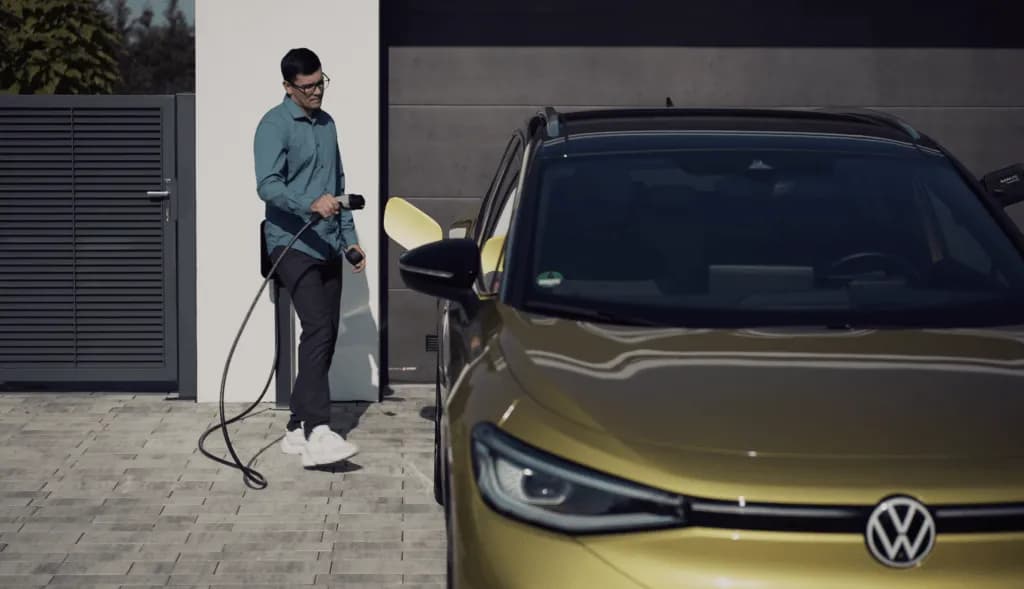
Public fast chargers remain expensive because their operators pay for high capacities and distribution fees. Home charging accounts for as much as 80 % of all kilowatt-hours that Czech electric cars actually consume. But if dynamic tariffs spread with strong motivation to charge at a precisely defined time, a new chapter will begin to open for e-mobility: cheaper power, better use of solar energy and less pressure on the grid at peak times.
Key facts in a nutshell:
The −50 % discount on the commercial price of electricity applies every day from 11:00 to 13:59 between April and September.
In winter (October–March) the tariff offers −10 % in the same time window.
The morning peak 5:00–7:59 carries +25 %, but the annual bill never exceeds the price of the standard price list.
A smart meter is a requirement; most households will get one automatically by 2027.
Summary
The ČEZ dynamic tariff offers the chance to make home charging of an electric car up to half as cheap. The discount targets the hours when photovoltaics pour out the most energy and the grid needs flexible consumption. Anyone who can shift the charging of their vehicle and other appliances into the noon window will save hundreds of crowns a month without risking higher bills. Cheaper power means cheaper kilometres and a stronger argument that e-mobility can be not only green but also financially advantageous.