EV Charger Comparison
Pick three stations and compare their parameters side by side.
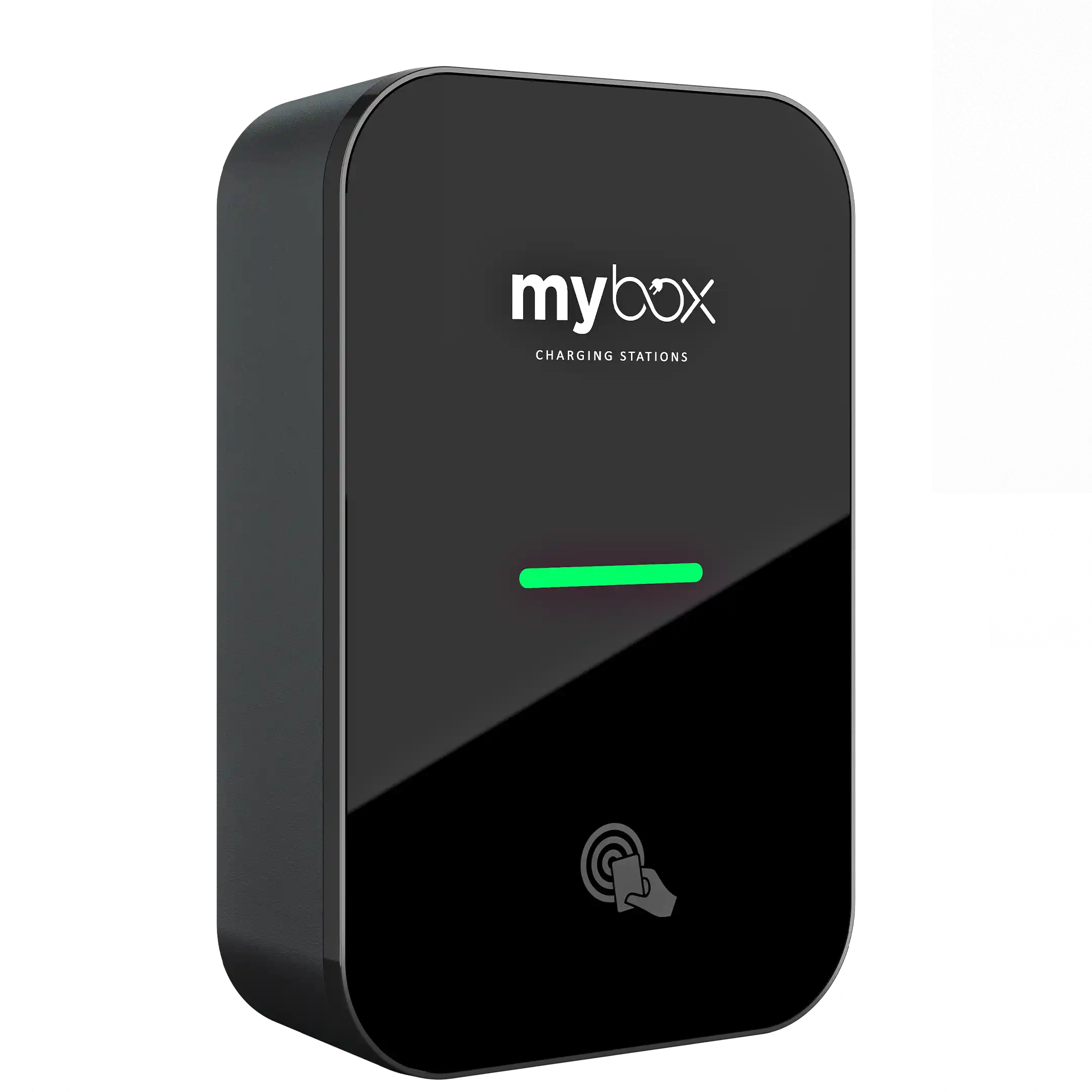
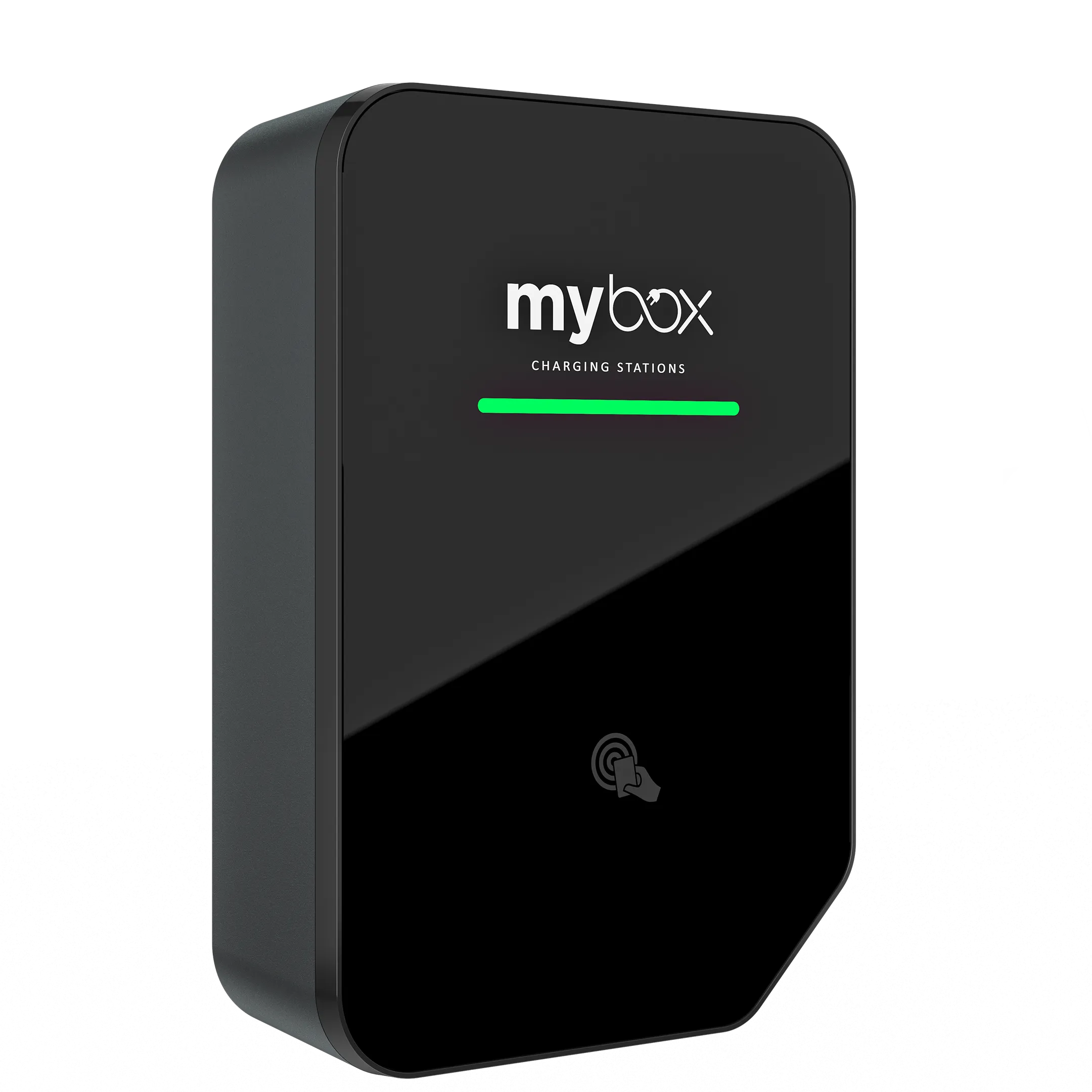
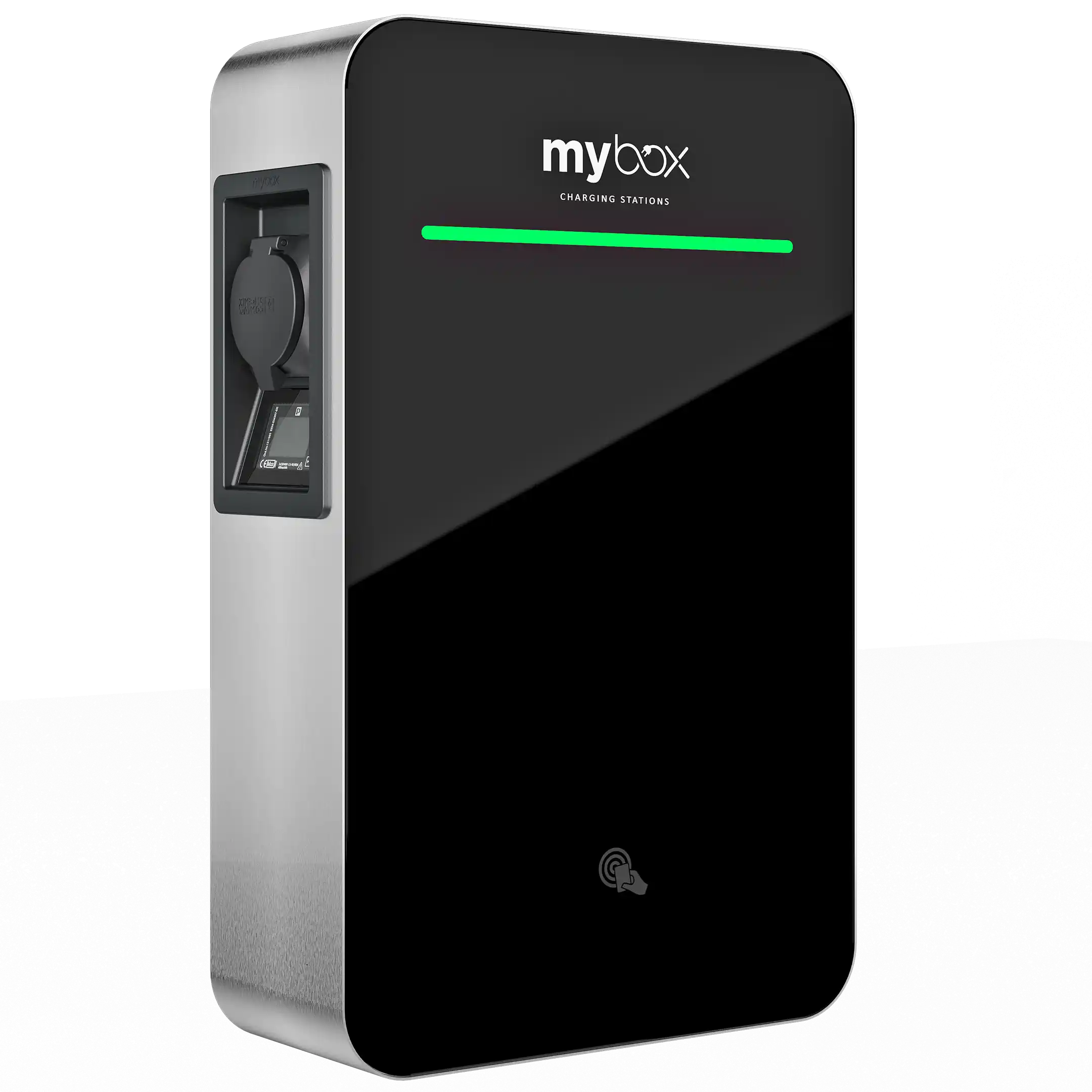
Charging speed
2 h 44 min (0→100 %)+129 km/h
2 h 44 min (0→100 %)+129 km/h
1 h 22 min (0→100 %)+259 km/h
Indicative, for a model vehicle: 60 kWh battery, 17 kWh/100 km. AC = 0→100% at full station power (real time depends on the car's onboard charger). DC = added range per 10 min at full station power, for a vehicle able to accept it.
Power & charging
Model
Home 11 / 22 kW
Plus 11 / 22 kW
Profi 2×22 kW
Max. output power
11 / 22 kW
11 / 22 kW
44 kW
Max. power per connector
—
—
22 kW
Number of connectors
1
1
2
Connector type
Integrated Type 2 cable
Type 2 socket or integrated cable
2× Type 2 socket or integrated cable
Voltage
400 V
400 V
400 V
Max. input current
3×16 / 3×32 A
3×16 / 3×32 A
3×64 A
Max. output current per connector
—
—
3×32 A
Power supply
3P + N + PE
3P + N + PE
3P + N + PE
PV surplus charging
Yes — MyBox AC sensor module
Yes — MyBox AC sensor module
Yes — MyBox AC sensor module
Connectivity
Communication
WiFi 2.4 GHz b/g/n
Ethernet RJ45, WiFi 2.4 GHz b/g/n
Ethernet RJ45, WiFi 2.4 GHz b/g/n, 4G/LTE (optional)
Protocols
Modbus TCP, MQTT, OCPP 1.6
OCPP 1.6, Modbus TCP, MQTT
MQTT (MyBox Cloud), OCPP 1.6J (higher-level CPO system), Modbus TCP
RFID reader
ISO-14443 A&B, Mifare 13.56MHz
ISO-14443 A&B, NFC, Mifare, Legic
Elatec TWN4 MultiTech 2 HF LF: ISO-14443 A&B, NFC, Mifare, LEGIC advant (LEGIC prime not supported)
Display or payment terminal
—
—
Optional 5" display with QR code (AFIR) or payment terminal — mutually exclusive
Safety & metering
Energy meter
—
MID class 1 (EN50470-1, EN50470-3)
MID, accuracy class B (EN 50470-1 and -3)
Circuit breaker
—
MCB characteristic B, 32 A
2× RCBO, characteristic B, 32 A, type A, 30 mA
RCD
—
RCD type A (30 mA)
2× RDC-DD 6 mA (DC residual current detection)
Connector lock
—
—
Connector lock
Access security
—
—
Key-operated door lock
Multi-station connection
—
—
Scaling via MyBox ARM (DLM) — up to 200 charging points
Dimensions & environment
Dimensions (W × H × D)
200 × 305 × 105 mm
280 × 410 × 120 mm
390 × 630 × 180 mm
Weight
4.5 kg
8.5–13.5 kg
25–35 kg
Material
Plastic and tempered glass
Plastic and tempered glass
Tempered glass, painted or stainless steel
Protection rating
IP54 / IK10
IP54 / IK10
IP54 with connector unplugged / IP44 with connector plugged in; IK10, polycarbonate windows IK08
Operating temperature
-30 to +50 °C
-30 to +50 °C
-30 to +50 °C
Operating humidity
5 to 95% non-condensing
5 to 95% non-condensing
5 to 95% non-condensing
Frequently asked questions
AC or DC — which to choose?
An AC wallbox (11–22 kW) is for longer stops at home or work — the car charges while it is parked. DC fast charging (50–400 kW) makes sense where a driver needs to top up in minutes, typically at public points and for fleets.
MyBox Home or Plus?
Home is for the home and PV surplus charging. Plus adds a certified MID energy meter for metered billing — it fits both a house and a business.
11 kW or 22 kW?
11 kW overnight is more than enough for most homes. 22 kW charges twice as fast but needs a stronger connection and a car that accepts 22 kW — the choice for businesses and faster vehicle turnover.
How does MyBox scale to multiple stations?
The dynamic load management unit (ARM) links and controls large installations — MyBox scales up to ~200 charging points and automatically distributes the available power across cars.