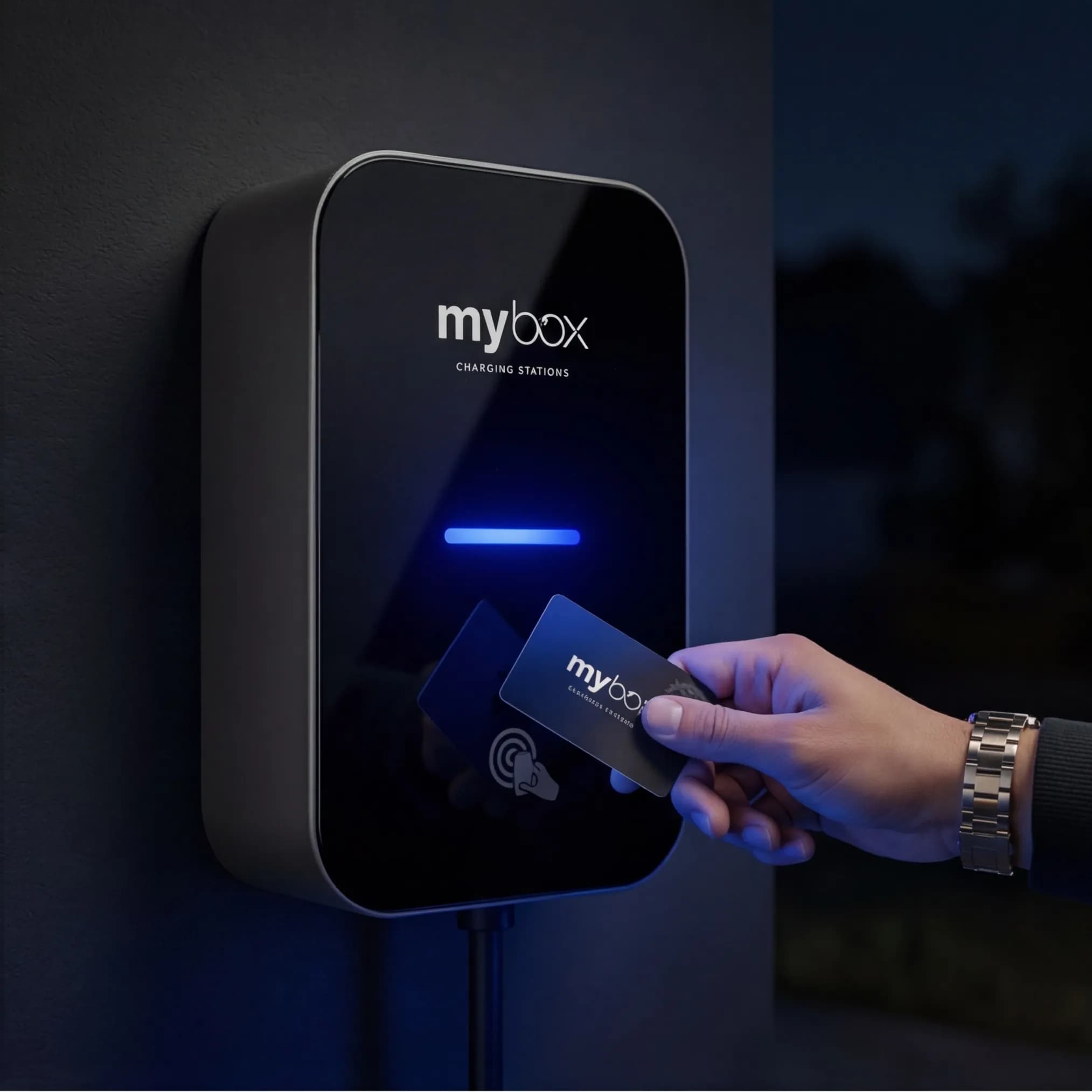
RFID Authorization
Secure charging at a touch. Tap your card and charge — no password, no app needed. Every user gets their own access.

Home charging station you can rely on. Premium components and advanced features inherited from higher models.
Overview of key charging station parameters
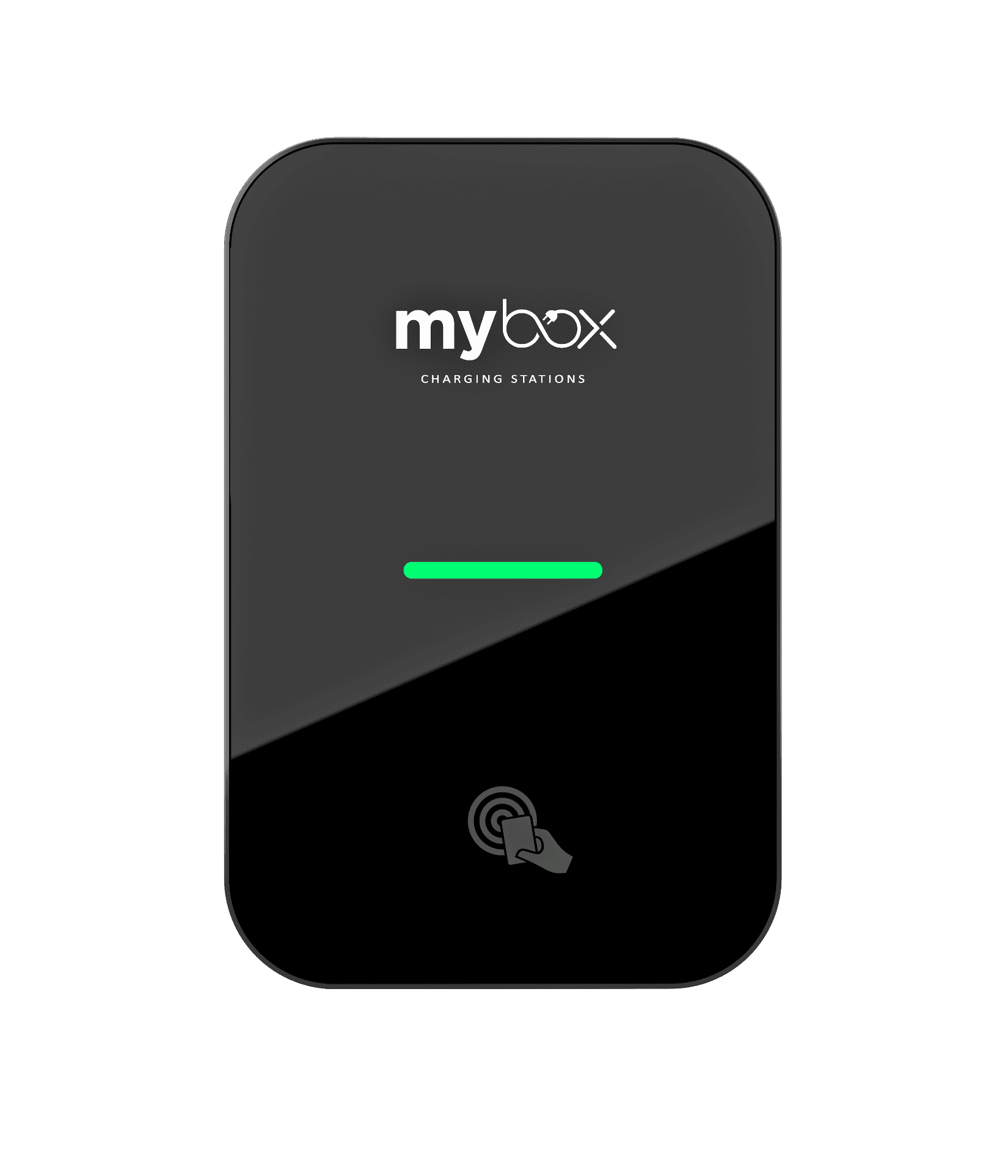
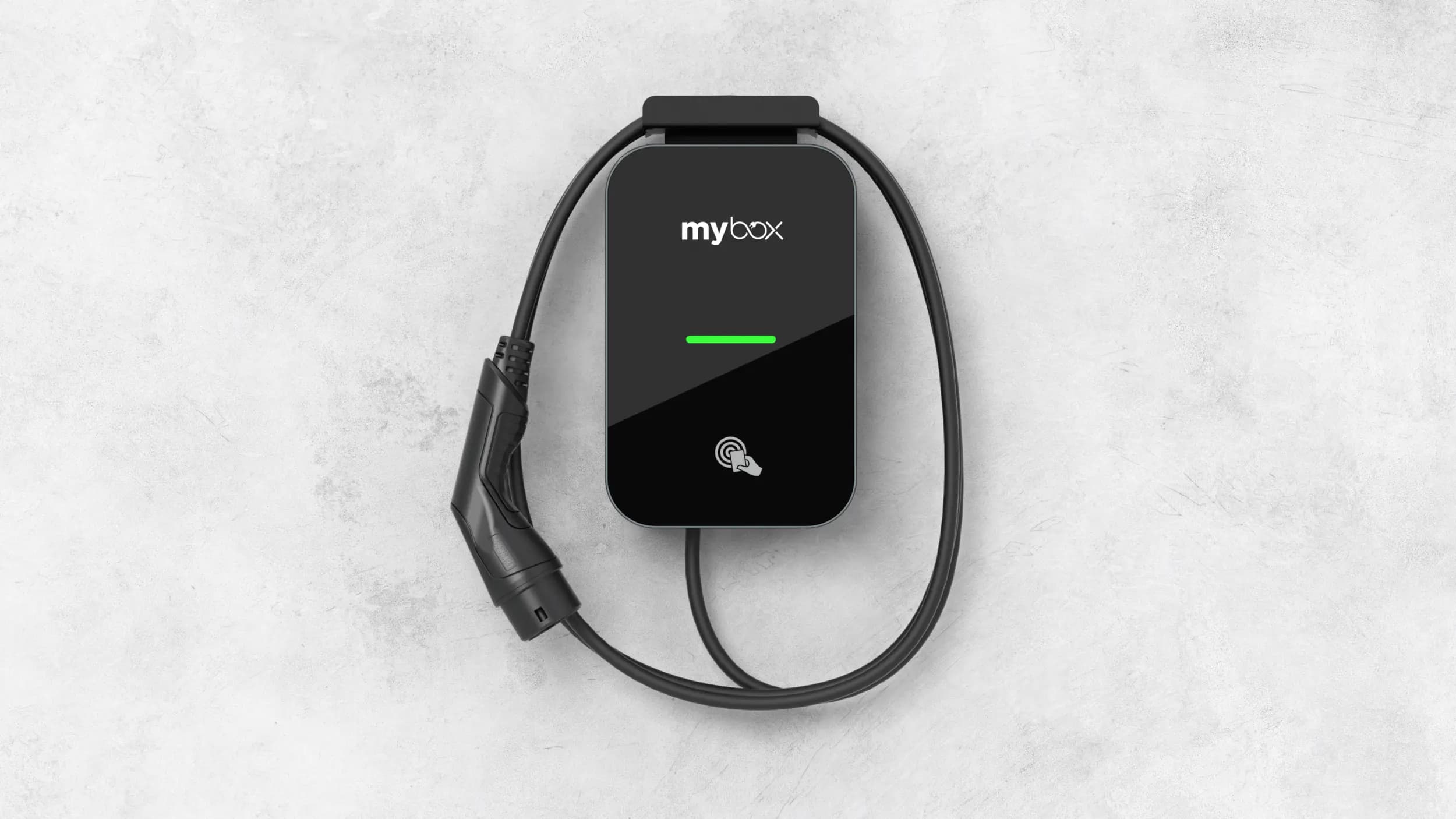
The front panel of the MyBox Home charging station is made of durable tempered glass, combining elegant appearance with long-term resistance to weather and mechanical damage. Choose from two color options – sophisticated black or pure white.
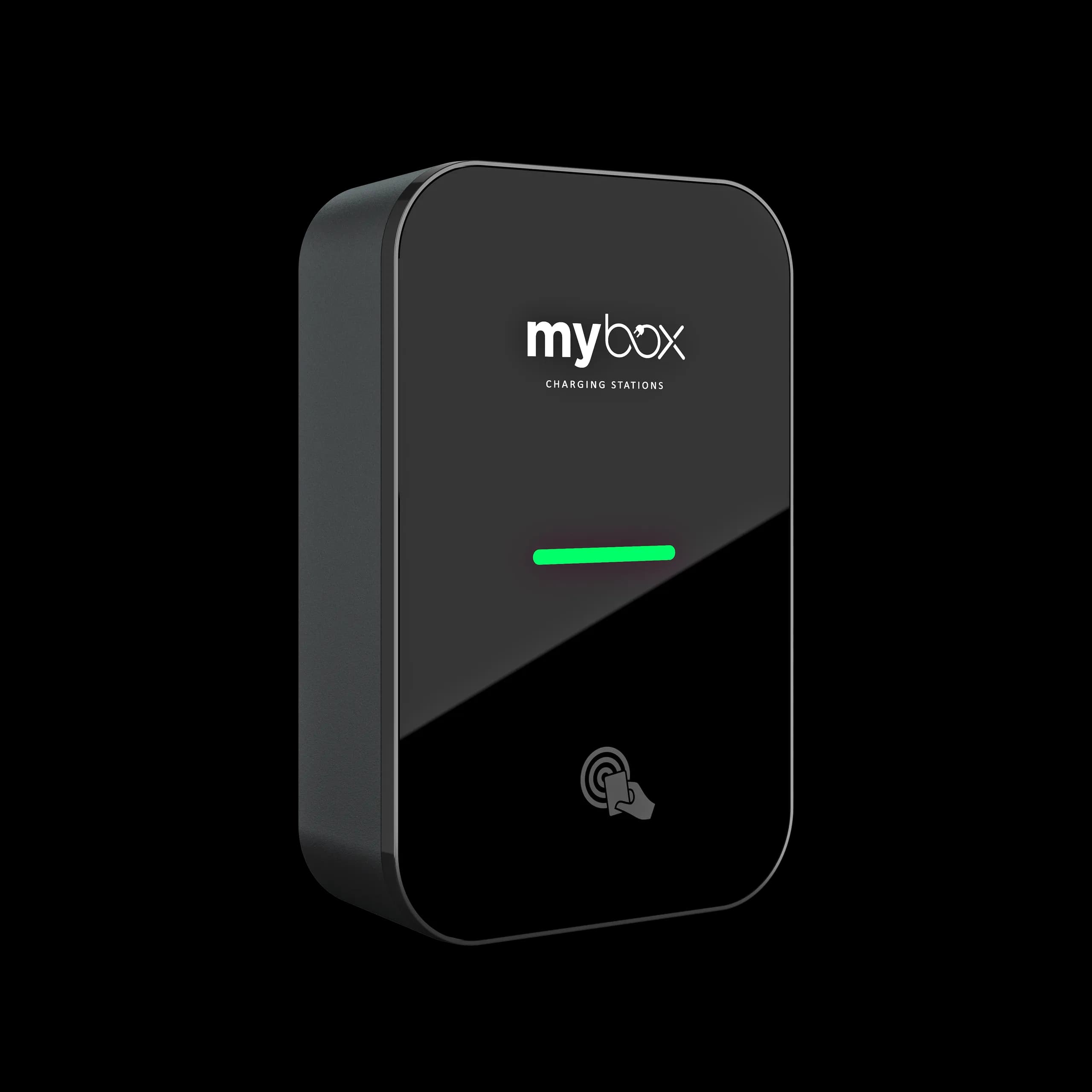
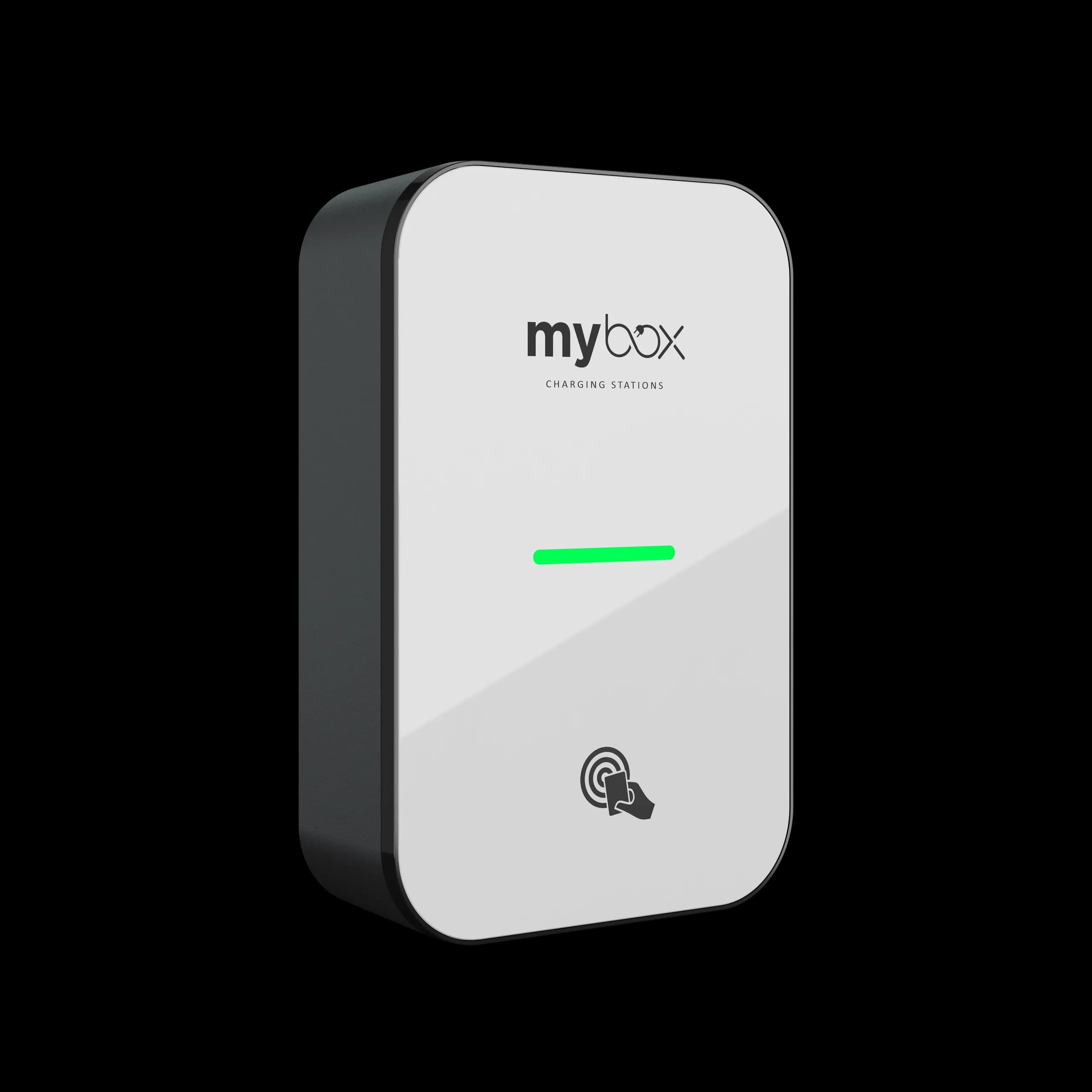
Slide to compare color variants
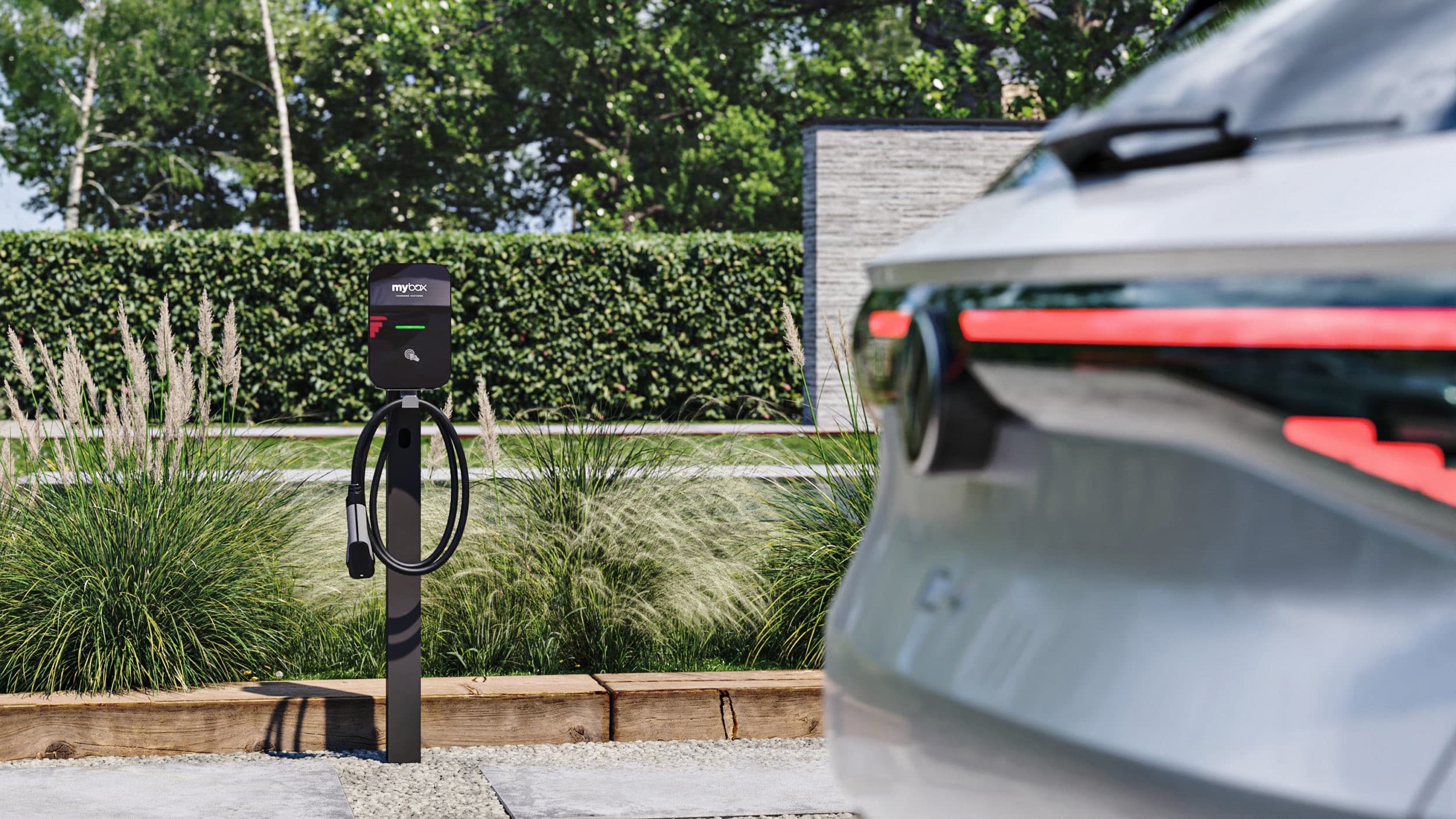
MyBox Home is designed for everyday life. Elegant design that matches your home. Performance that keeps up with your pace. Simplicity you'll love.
Plug in at night, wake up fully charged. No planning, no worries. It just works.
Clean lines. Tempered glass. Timeless design you can customize with your own print.
Connect to solar. Track in the app. Charge cheaper when energy is most affordable.
Secure charging at a touch. Tap your card and charge — no password, no app needed. Every user gets their own access.

With the mybox AC Sensor module, the station monitors current grid load and adjusts charging power accordingly. No overloading, no worries — just smart and efficient charging.

Charge directly from the sun. With the mybox AC Sensor module, MyBox Home can tap into solar surplus from your PV system to charge your vehicle.

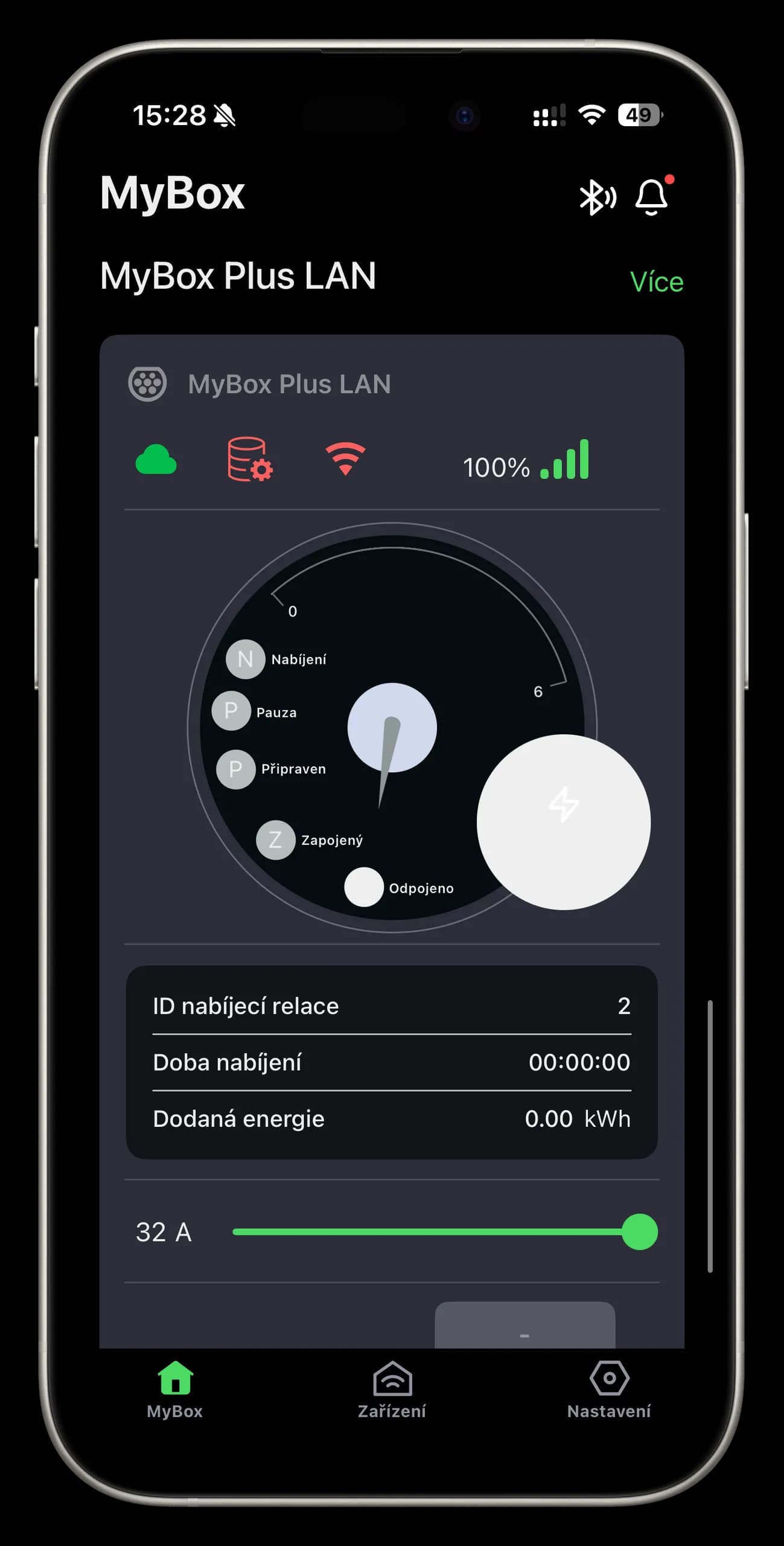
Stay in control from anywhere. Review charging history, adjust power, and configure solar settings from the mobile app — all in one place.
The clean design of the MyBox Home station will complement the style of your home, whether in the garage or outside. Take advantage of the option for custom front panel printing and personalize your wallbox with your favorite pattern or family symbol. We are changing the standard of home charging. We want you to charge your electric cars reliably not only at public hubs, but also at home. Thanks to European components and a durable body, the station will serve you for many years.
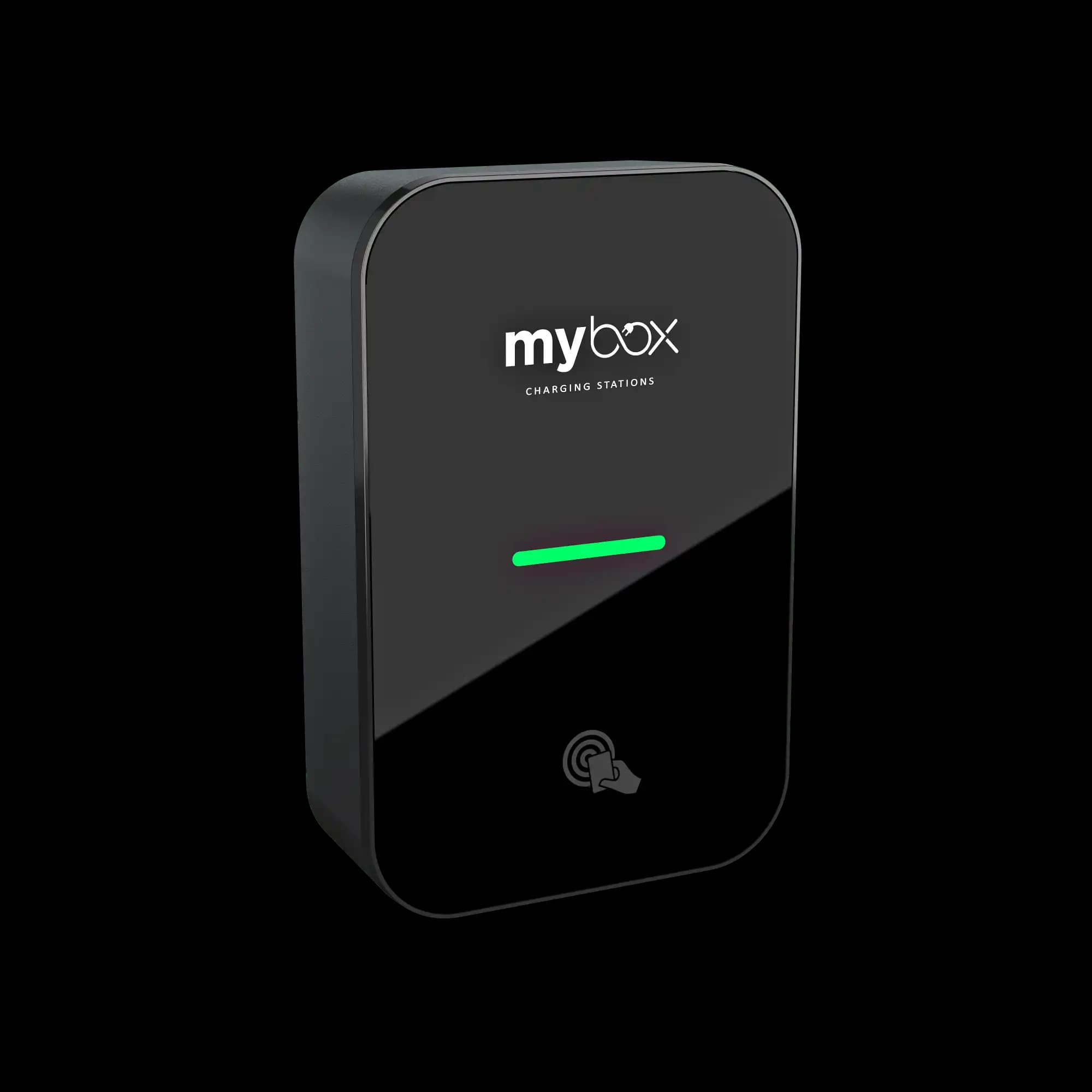
Operating the home station takes just a few moments. You park, connect the charging cable and nothing else to worry about. Thanks to the Smart LED indicator and mobile app, you will have an overview of the charging connector status whether you charge during the day or at night. The station includes one integrated cable. You wont have to deal with finding your own charging cable and plugging it in.
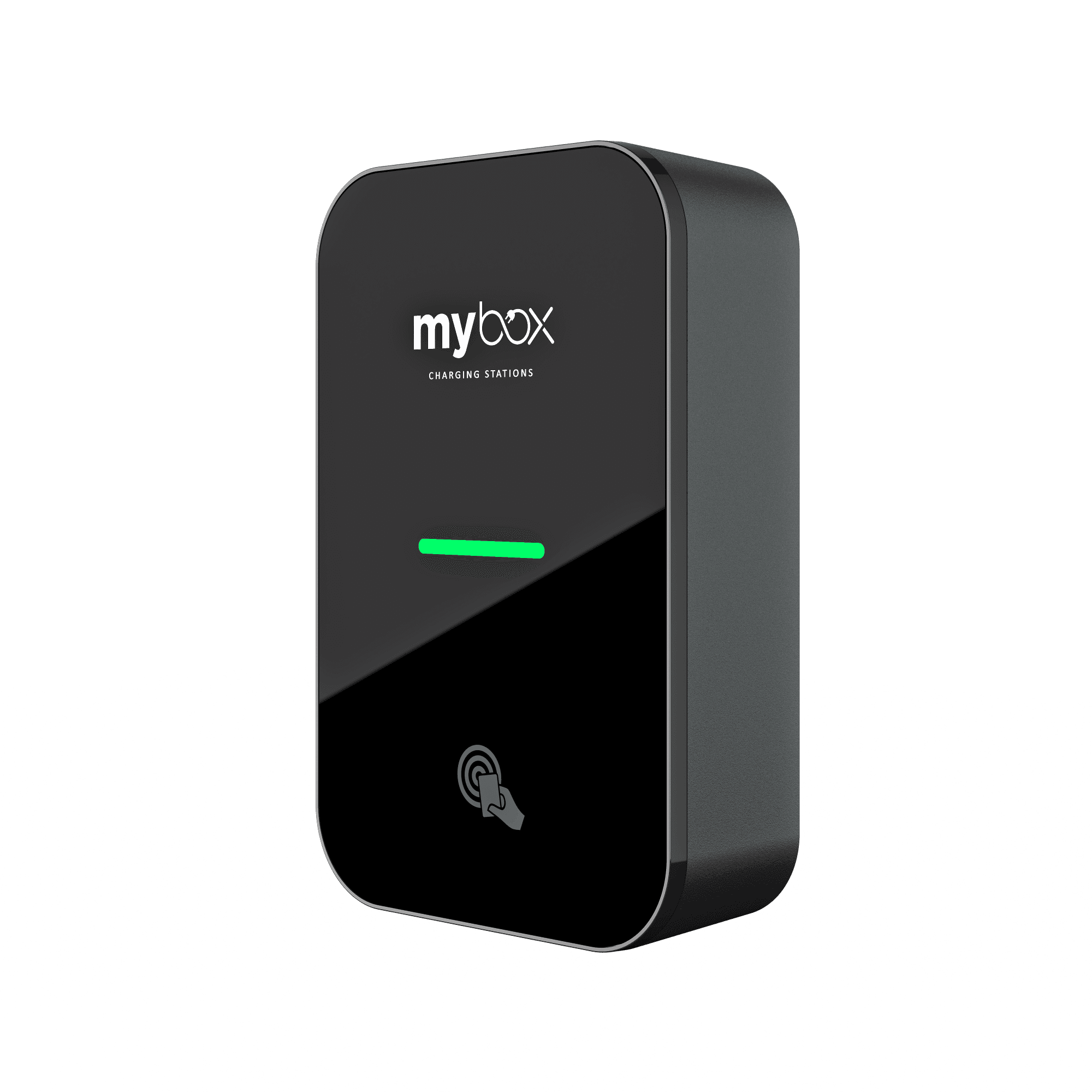
The station fits into the MyBox ecosystem and follows the smart home trend. It connects to the internet and uses its own Cloud, with CPO or other systems. Control the wallbox easily using your smartphone. Thanks to the MyBox mobile app, you will have constant overview of the charging process. After connecting to a photovoltaic system, you can easily use surplus energy.
We understand your individual needs. That's why we offer optional accessories for our charging stations. Customize the final look of your station to match your preferences.
Accessories for MyBox Home station:
Datasheets, manuals and certificates
Detailed specifications and technical data
MyBox Home is available in 11 kW and 22 kW variants. The 11 kW version charges an average EV with a 60 kWh battery in about 6 hours, while the 22 kW version takes about 3 hours. For a standard home connection with a 3×25 A breaker, we recommend the 11 kW variant.
MyBox Home starts from 17,400 CZK excl. VAT (21,054 CZK incl. VAT) for the 11 kW variant with an integrated 5 m cable. A more powerful 22 kW variant is also available. The price includes the wallbox with cable, RFID reader and WiFi connectivity.
MyBox Home requires a three-phase connection (3P + N + PE) with 400 V voltage. The 11 kW variant needs a 3×16 A breaker, while the 22 kW variant requires 3×32 A. We recommend checking your connection capacity with an electrician before installation.
Yes. With the MyBox AC Sensor module, the station monitors solar surplus from your PV system and automatically adjusts charging power. You charge primarily from solar energy and save on electricity costs.
Yes. The MyBox app is available for iOS and Android. You can remotely control charging, monitor energy consumption, set charging schedules and manage RFID cards for individual users.
The direct Nová zelená úsporám (New Green Savings) subsidy for home charging stations ended on 10 November 2025. The current stage of the programme offers an interest-free loan instead, in which a charging point is supported only as part of a photovoltaic installation on a family house — it cannot be funded on its own. We do not prepare or process subsidy applications — we will tell you which call your project fits and prepare the technical design, the grid connection documentation and the project budget.