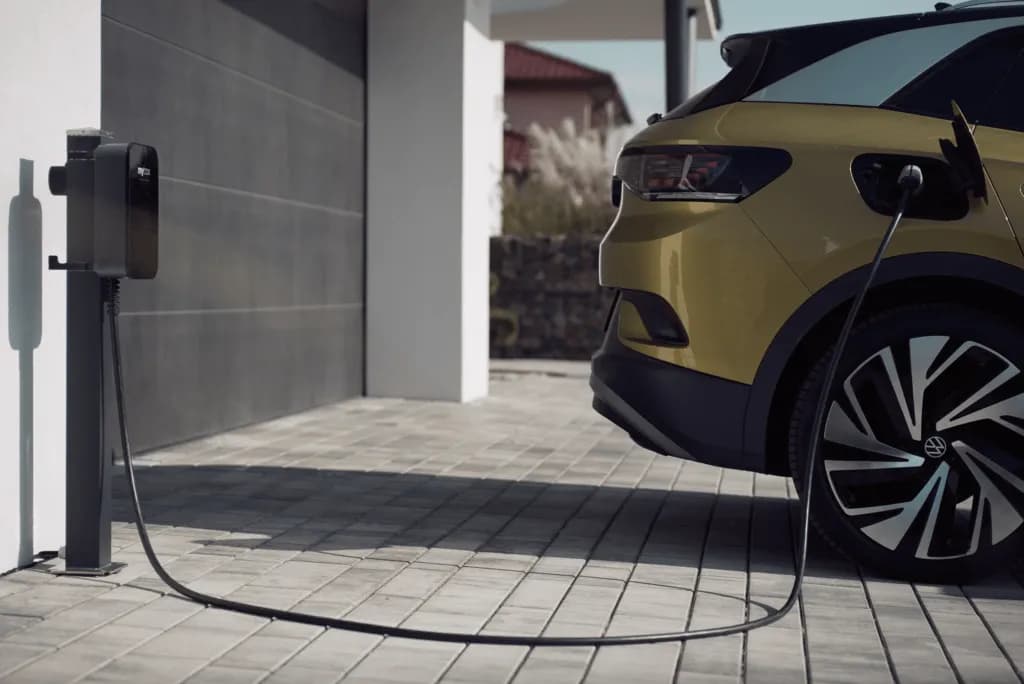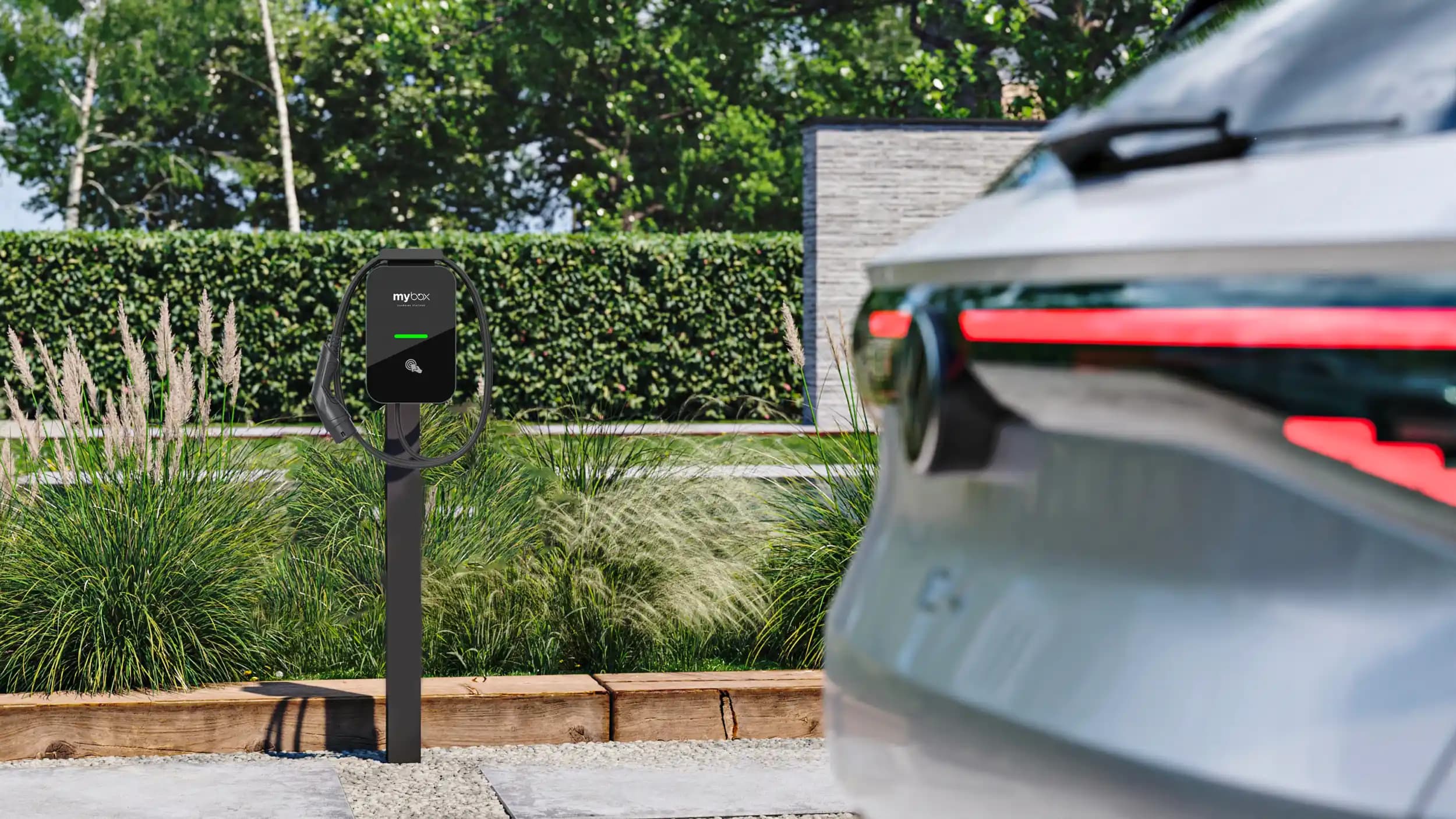
The MyBox Home and MyBox Plus charging stations are among the most affordable. Yet they have much in common with higher professional station models and feature advanced functions. When looking at the catalog, you might even think that apart from the design and connector type, they have identical parameters. However, there are other differences between them that you should consider when making your choice.
What Home and Plus Have in Common
Before we focus on the differences, let's talk about what the MyBox Home and MyBox Plus charging station models have in common.
First and foremost, it is the high charging power of 22 kW, which meets the needs of not only today's but also future electric vehicles. Both types of wallboxes have a front panel made of tempered glass and a chassis made of durable plastic. They have the same degree of protection and withstand harsh climatic conditions — they are also suitable for outdoor installation.
Both the Home and Plus models also support RFID chip identification, have a clear status indicator, and allow remote control via a mobile application. They can connect to the internet, use the cloud, and communicate with other systems via the OCPP protocol. Both models naturally also support dynamic power management and integration with photovoltaics.
For Households and Small Businesses
Both the MyBox Home and Plus charging stations are primarily designed for households and small businesses. They create reliable charging infrastructure and thanks to the ability to connect multiple stations, they are also suitable for charging multiple vehicles. As we will explain in the following lines, MyBox Plus additionally supports the integration of additional components and functions that are useful especially in the business sector.
How MyBox Home and MyBox Plus Differ
At first glance, you can recognize them by their different design. The Home model has smaller dimensions and gentle rounded edges. In contrast, the Plus station is more robust. Its characteristic and dominant feature is the beveled edge, which creates space for a socket or cable. The main differences also include:
Certified Energy Meter
Especially for business customers, it is important that their charging station is equipped with a certified energy meter. You will find this in the MyBox Plus model. It cannot be integrated into the Home variant. The energy meter is important, for example, for obtaining records for the driving log, distributing consumption among employees, or monetizing the charging point.
In a home environment, an energy meter is usually not necessary. However, if you want to create publicly accessible charging points at home, or share the station with neighbors, you will also need a certified energy meter. The same applies if you want to use a shared charging station for all residents of an apartment building.
Cable Connection Method
With the MyBox Home charging station, the cable is always integrated. It has a fixed length and is part of the station. With the Plus station, you can also have an integrated cable, but a socket variant is also possible. From this perspective, Plus is more versatile.
Ultimately, it depends on user preferences. The advantage of a socket is easy cable replacement with another one, whether due to unsuitable length or damage. With an integrated cable, operation is faster and simpler — the step of plugging the cable into the socket is eliminated.
Connectivity and Connection Options
Although MyBox Home is the basic model primarily designed for home charging, it excels with above-standard connectivity options:
WiFi 2.4 GHz b/g/n
Modbus / RTU / RS485
RFID reader / 1-wire
Serial TTL
MQTT broker / client
OCPP 1.6
The Plus model supports the same data connection and communication options. Additionally, it also offers the option of adding Ethernet RJ45, so you don't have to rely on wireless data transmission. An Ethernet connection is also important if you require integration with a smart home distribution board and other Smart elements.
If you absolutely need wired data transmission, or simply cannot connect the station via WiFi, consider purchasing the Plus model.
Integration Options for Protective Elements
Due to its compact dimensions, the MyBox Home station also has certain limitations regarding the integration of protective electrical components. It already includes a DC leakage current detector as standard. However, it cannot have an integrated circuit breaker or residual current device — these protective elements must be part of the electrical installation preparation.
The higher MyBox Plus model can be equipped with both a circuit breaker and a residual current device. The Plus model thus meets higher safety requirements and is also suitable for commercial and publicly accessible spaces.
When to Choose the Plus Variant?
MyBox Plus features a certified energy meter, has higher connectivity, and allows the integration of a range of protective elements. It is a suitable choice especially for small and medium-sized businesses. If they can manage with a single charging port, they don't need to invest in the Profi variant, the Plus model will suffice. In households, it is relevant if the user needs an energy meter, wants a circuit breaker and residual current protection in the device, or prefers a solution with a socket.
MyBox Home is primarily designed for households that use one electric vehicle within the family. It is powerful and reliable. Thanks to this, it can also serve small businesses that can do without an energy meter and additional features.
Do you already know which charging station model will be right for you? If you have any questions or would like more specific advice on your selection, contact us. We will give you individual attention, whether you are an end consumer or a business customer.