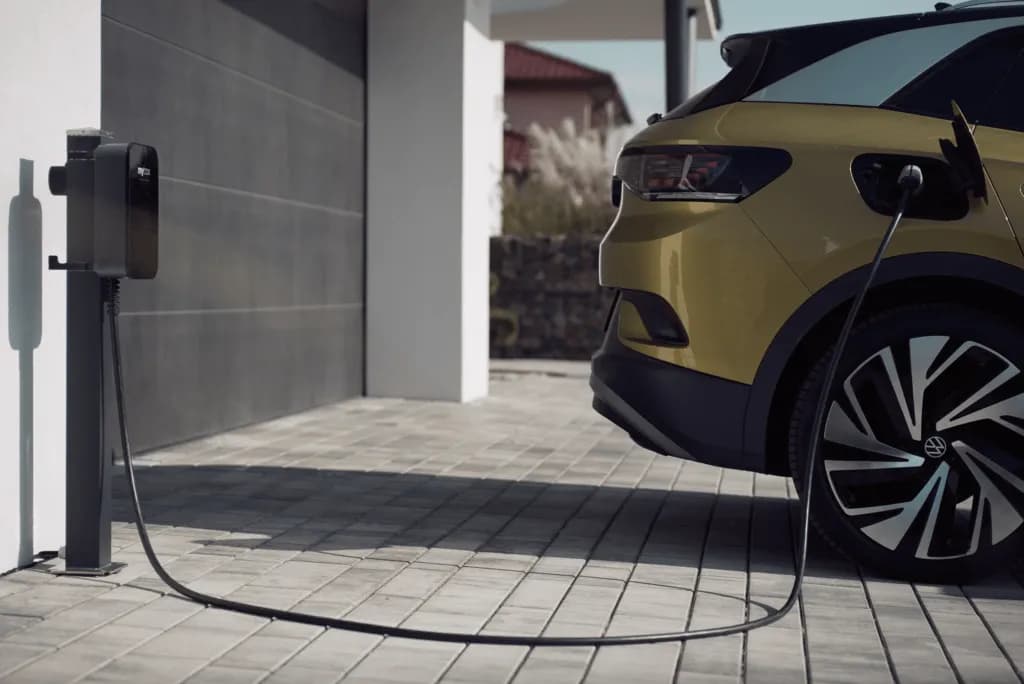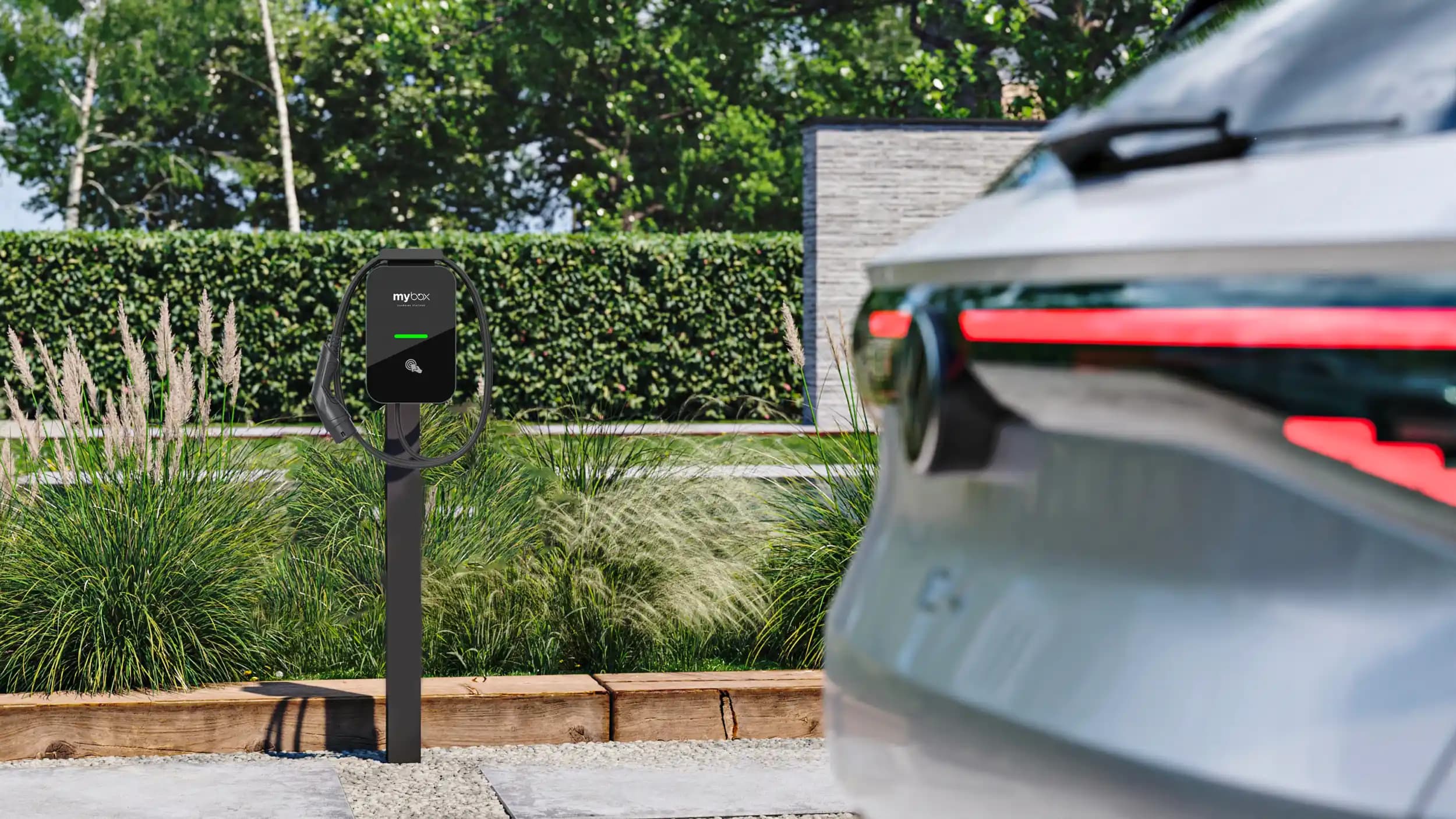
A wallbox with a tethered cable has the cable permanently attached to the station — you walk up, grab the Type 2 connector, plug it into the car and that's it. For an ordinary home garage this is the most convenient and usually the cheaper option. The socket version is more flexible: you bring your own cable, you can swap it or carry it with you, which pays off at shared and semi-public parking spaces.
When choosing an EV charger for the garage you hit a key decision right away: do you want a wallbox with a tethered (integrated) cable, or a station with a socket you plug a separate cable into? In Europe both use the same Type 2 connector under the IEC 62196-2 standard, but they differ in convenience, cost and who they suit. This article is a decision guide for exactly that choice — the broader selection criteria (power, durability, controls) are covered separately in what to focus on when choosing a home charging station.
What "tethered cable" and "socket" actually mean
The terms get confused in practice, so let's clear them up first.
Wallbox with a tethered cable — the cable is permanently attached to the station. After charging you simply hang it over the holder on the unit. Nothing to buy, nothing to plug in.
Wallbox with a socket — the station only has a Type 2 socket and you buy the charging cable separately. Before every session you plug it in at both ends (into the station and into the car).
Note: don't confuse this with the question of "wallbox vs an ordinary 230 V household socket". That's a different topic — whether a standard socket is enough for you is covered in can I use an ordinary household socket to charge an EV at home. Here we compare two versions of a full-featured wallbox against each other.
And don't confuse it with the connector type either. Type 2, CCS2 or CHAdeMO are different plug shapes — that's covered in the article on charging connectors. For home AC charging in the Czech market, Type 2 is the standard for both versions.
Comparison: tethered cable vs socket
Criterion | Tethered cable | Type 2 socket |
|---|---|---|
Convenience | Higher — grab and plug in | Lower — carry the cable, plug in at both ends |
Cost of the solution | Cable included with the station | Cable bought separately (approx. CZK 2,500–5,000) |
Cable flexibility | Fixed length, cannot be changed | Choose length and type, carry the cable with you |
Theft / vandalism | Cable is always at the station | Cable put away, lower risk of damage |
Weather, wear | Connector hangs outside, exposed to the elements | Connector stored in the car |
Typical user | Home garage, one car, convenience | Shared bay, companies, varied cars, semi-public |
In short: tethered cable = convenience and a lower purchase price, socket = flexibility and lower cable-wear risk in exposed locations.
How long a cable to choose (and why it matters)
With a tethered cable the length is fixed, so you have to get it right up front. The most common, proven length is 5 metres — which is what most home wallboxes, MyBox included, come with. When planning, think about where the car's charging port is (left/right, front/rear) and how you'll park in the garage or bay. Five metres comfortably serves one bay; if you want to charge two parking positions from one spot, or reverse in from a distance, consider a longer cable or rather the socket version.
Practical tips:
Measure the distance from the planned station location to the car's charging port and add a margin for routing the cable around obstacles, not as the crow flies.
A cable that's too long is harder to stow and gets in the way; one that's too short forces you to park "to the centimetre".
With the socket version the cable itself handles the length — typically 5 m, longer on request. We dig into this question too in what to focus on when choosing a home station.
Security, weather and durability
With a tethered cable the connector stays at the station permanently, so it's exposed to the weather and, in theory, to theft. A quality wallbox therefore locks the cable in the car's connector while charging and has a holster, which protects the connector from the ground and moisture. For outdoor mounting, check the unit's IP rating and temperature range.
With the socket version you have the advantage that you put the cable away in the car after charging — no one can damage or steal it. That's why the socket is more often chosen for semi-public and shared bays, where the station is used by several people. We cover the differences between home, company and public deployments in home, company and public charging stations: how they differ.
Whatever you choose, at shared bays charging authorisation is handy so you know who charged and how much. That's what an RFID reader is for — tap a card and charge, no app or password.
Who each version suits
Choose a tethered cable when:
you charge one car at home in a fixed bay,
you want maximum "walk up and plug in" convenience,
you don't want to deal with buying or storing a cable.
Choose a socket when:
the station is shared by several users or cars with different port positions,
it's a company, apartment-building or semi-public bay,
you want to carry the cable with you or replace it in the future.
How MyBox handles it
MyBox Home is a home wallbox supplied with a single tethered Type 2 cable 5 m long, in 11 or 22 kW. No hunting for your own cable and no plugging into a socket — exactly for the "convenient home garage" scenario. The station offers RFID authorisation, app control, dynamic load management and integration with photovoltaics, so you charge when energy is cheapest.
MyBox Plus we supply in both a socket and a tethered-cable version (Type 2 per IEC 62196-2). On top of that it has a certified MID energy meter, so it measures consumption precisely — ideal for companies, apartment buildings and reimbursing charging to employees. If you're torn between the two models, the comparison MyBox Home vs Plus: differences and tips for choosing will help.
For a full overview of the AC models, see the AC charging stations page and the overall hub on the charging stations pillar. For company deployments with billing and multiple bays, we recommend starting with the charging for companies solutions.
Summary
For most households in the Czech Republic the best choice is a wallbox with a tethered 5 m cable — it offers the greatest convenience at a lower purchase price. Choose the socket version where you need flexibility, want to put the cable away, or the station is shared by several users. With MyBox, MyBox Home covers the first scenario and MyBox Plus flexibly covers the second, offering both versions.
Frequently asked questions
Is a wallbox with a tethered cable or a socket better?
For a home garage with one car a tethered cable is usually better — it's more convenient (walk up and plug in) and the cable is included in the station's price. Choose the socket version when the station is shared by several users, you want to swap or carry the cable, or it's a semi-public and company bay where putting the cable away after charging makes sense.
How long a charging cable do I need for a wallbox?
The most common, proven length is 5 metres, which is what most home wallboxes, MyBox included, come with. Measure the real distance from the station to the car's charging port and add a margin for routing the cable around obstacles. With the socket version the cable itself handles the length, and you buy it as needed.
What connector does a garage wallbox have in the Czech Republic?
For home AC charging, the Type 2 connector under the IEC 62196-2 standard is the norm in Europe and the Czech Republic. Both the tethered-cable and the socket version use it. DC fast-charging connectors such as CCS2 or CHAdeMO don't apply to home wallboxes.
Is a tethered cable at risk of theft or damage?
With the tethered version the cable is permanently at the station, so it's more exposed to the weather and to the risk of theft. A quality wallbox therefore locks the cable in the car's connector while charging and has a holster protecting the connector. Anyone who wants to stow the cable after charging will go for the socket version.
Does MyBox supply a wallbox with a tethered cable?
Yes. MyBox Home is supplied exclusively with a tethered Type 2 cable 5 m long, in 11 or 22 kW. MyBox Plus can be chosen in both a socket and a tethered-cable version, and additionally has a certified MID energy meter for precise consumption metering.