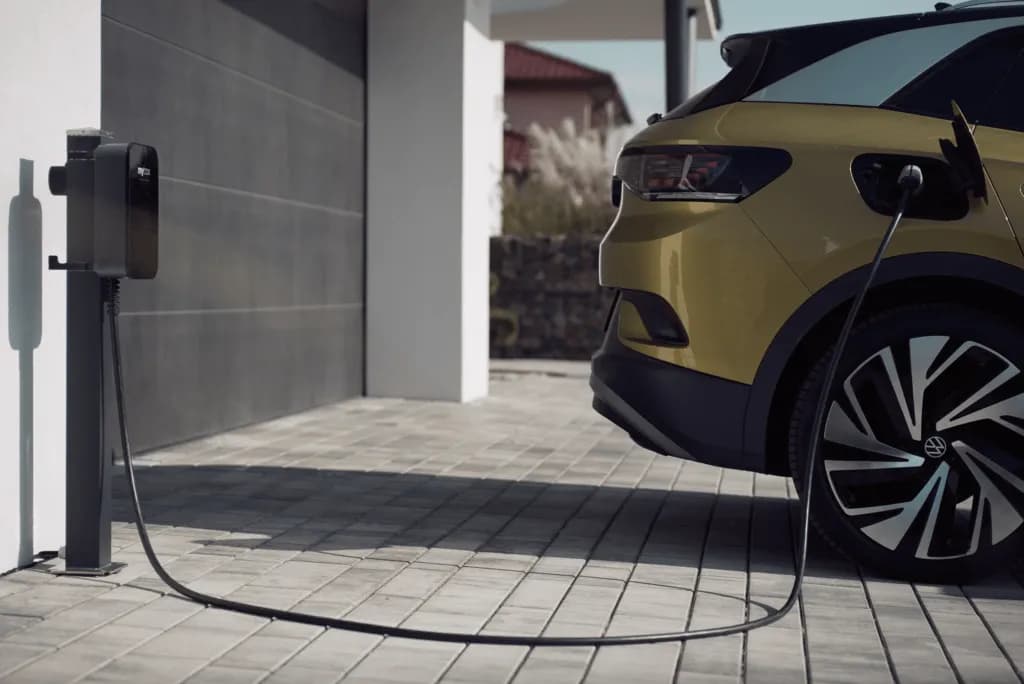
and global policy also aims to support clean mobility. On the other hand, there is electric freight transport – less visible, yet crucial for the future of logistics.
Electrification of Freight Transport Is Not an Experiment
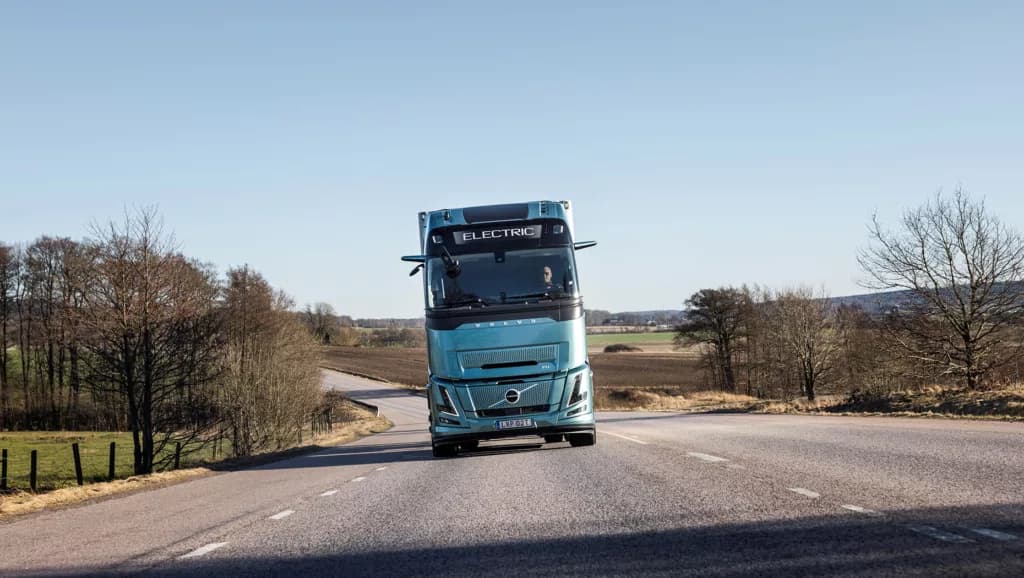
Development in the electric truck segment is progressing more slowly than with passenger EVs. Nevertheless, technology is moving forward, and the key leaders in the segment – Volvo, Scania, and MAN – show that electrification is definitely not an experiment but a real path forward.
Companies looking for environmentally friendly and economically sustainable solutions for their fleet have plenty to choose from. However, for successful integration of electromobility into freight transport, it is not just about selecting the right vehicle, but above all about the right charging strategy. That is why at MyBox we are intensively addressing the question of truck charging.
Current State of the Electric Truck Market
Leading manufacturers are continuously expanding their offerings and improving the specifications of their models. Volvo Trucks now offers electric models FH, FM, and FMX with a range of up to 300 km and over 600 horsepower.
Scania primarily focuses on urban logistics with L and P series models featuring up to 300 kWh batteries and enabling fast charging. MAN has introduced the eTGX and eTGS models with a range of around 500 km and technologies optimised for long-distance transport.
Trends in the segment suggest that electric freight transport will grow in the coming years, particularly with the development of battery technologies and charging infrastructure.
Electric Trucks and Their Practical Use
According to Eurostat, 45% of goods transported in Europe travel less than 300 km. Electric vehicles therefore have great potential, especially in regional transport. By creating a well-thought-out charging system, the range can be significantly extended without major limitations or route detours.
For example, according to information from Volvo Trucks, the company DHL Freight in Sweden uses electric trucks to transport goods between Gothenburg and Jonkoping. The route is approximately 150 km long. Thanks to a well-designed charging system, the trucks cover 450 km per day, with the combination carrying a total weight of 60 tonnes.
How to Efficiently Charge Electric Trucks and Vans
Successful electrification of company fleets is not just about choosing the right vehicle, but above all about a well-thought-out charging strategy. Companies have two main options for ensuring reliable charging of their trucks:
1. Company Charging Infrastructure
Having your own charging stations gives companies independence, lower costs, and maximum flexibility. They can plan charging according to their operational needs and easily optimise energy consumption. The advantages include:
Operational stability – vehicles are always ready to drive without reliance on the public network
Lower electricity costs – ability to use lower tariffs or integration with photovoltaics
Safe and efficient charging – tailored to the needs of a specific fleet
2. Public Charging Network
Public charging stations are gradually growing, but their availability and power are not yet optimal for long-distance transport. There is a particular lack of high-power chargers adapted for trucks and corresponding infrastructure on key routes. For companies with regional delivery, public charging points can supplement their strategy, but for efficient operations, charging at their own premises remains the primary option.
MyBox Profi 43 kW – The Result of Collaboration with Volvo
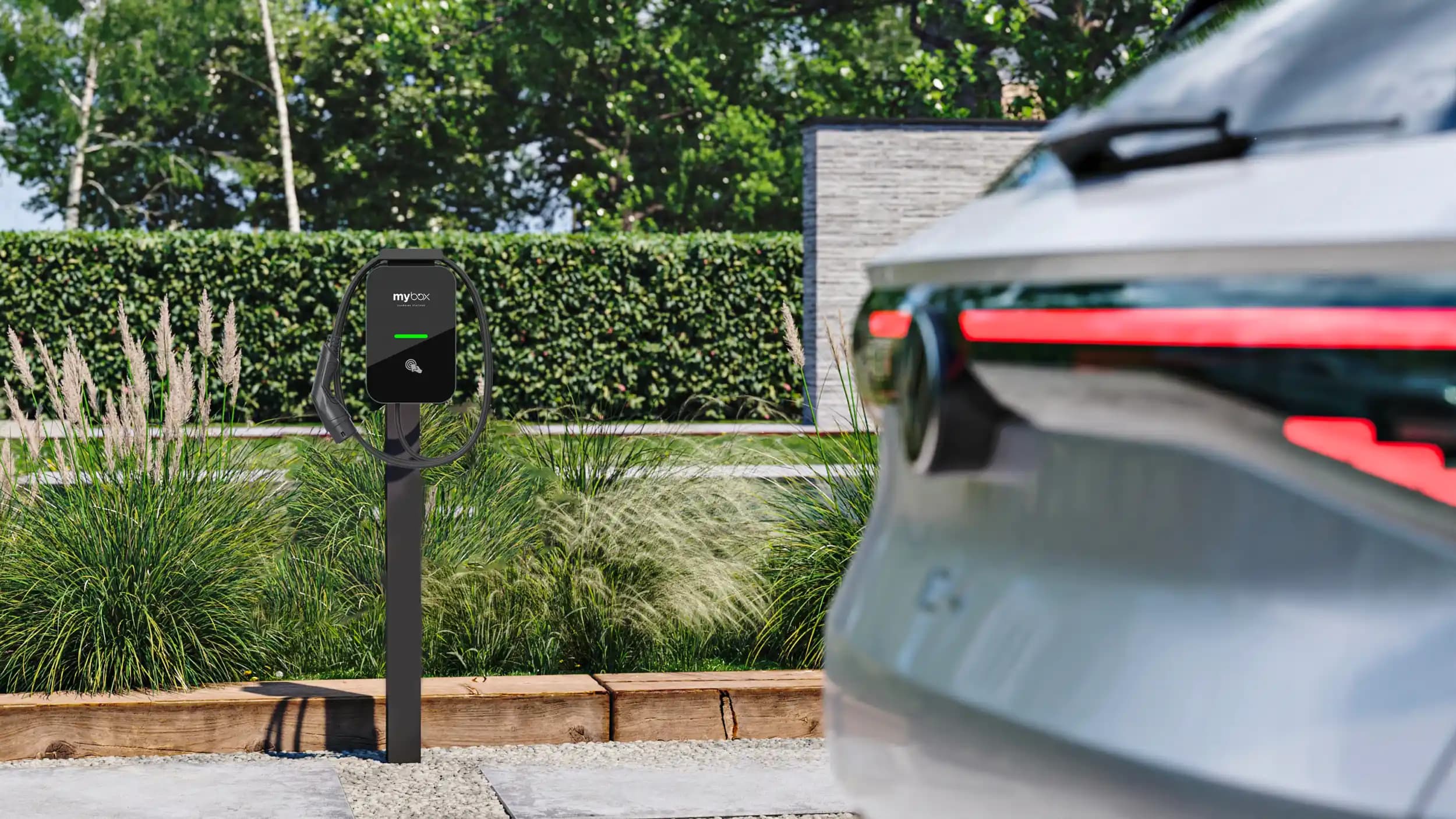
The Swedish manufacturer Volvo Trucks has long been a pioneer in the electrification of heavy transport. To be able to efficiently charge its iconic Volvo FH Electric and other models using AC technology, it sought a partner for developing a station with above-standard power output. The choice fell on MyBox. Thanks to this collaboration, the MyBox Profi 43 kW charging station was created, which in the AC charging solutions segment has practically no competition. Its main advantages include:
High power output – significantly faster charging compared to standard AC chargers.
Fleet optimisation – ideal for electric trucks and vans.
Easy management and integration – full compatibility with company infrastructure.
Modularity and scalability – easy expansion as the fleet grows.
Integration into company premises – connection with energy management systems.
Cost savings – optimised charging to minimise operating expenses.
Thanks to MyBox Profi 43 kW, transport companies can easily transition to electric mobility, ensure operational stability, and reduce operating costs. If you are also considering electrifying your fleet, contact us. We will prepare a comprehensive solution for charging your fleet that will have you ready for the future of electromobility.