The battery in a modern electric vehicle loses only around 2% of its capacity per year in real-world use. After 8 years – the end of the standard warranty (8 years / 160,000 km with a guarantee of ~70% capacity) – most batteries still hold over 80% and degrade gradually, not all at once. In practice, the battery usually outlasts the car itself; documented vehicles have covered hundreds of thousands of kilometers.
How fast does an electric vehicle battery degrade?
According to an extensive analysis of telematics data (a Geotab study of more than 22,000 electric vehicles), the average battery loses roughly 2% of its capacity per year (more precisely 1.8–2.3% depending on the intensity of fast charging; established models with an eight-year history only ~1.4% per year). The key point is that a battery is not “used up” at some fixed number of kilometers – the capacity declines smoothly and predictably.
How long does the battery last in years and kilometers?
With average degradation, a battery has roughly 80% capacity even after 8 years (vehicles with lower mileage even more).
The projected lifespan is commonly 13–20 years or more – longer than the average car; even after 20 years the battery has, according to the data, roughly 64% of its original capacity (this is a projection from the current annual rate).
Independent research (Stanford/SLAC, published in Nature Energy, 2024) also showed that real-world driving extends battery life by up to ~38% compared with a laboratory test – earlier estimates were too pessimistic.
Real stories – how long batteries actually last
Documented cases show that batteries last far longer than is generally expected (miles converted to km approximately):
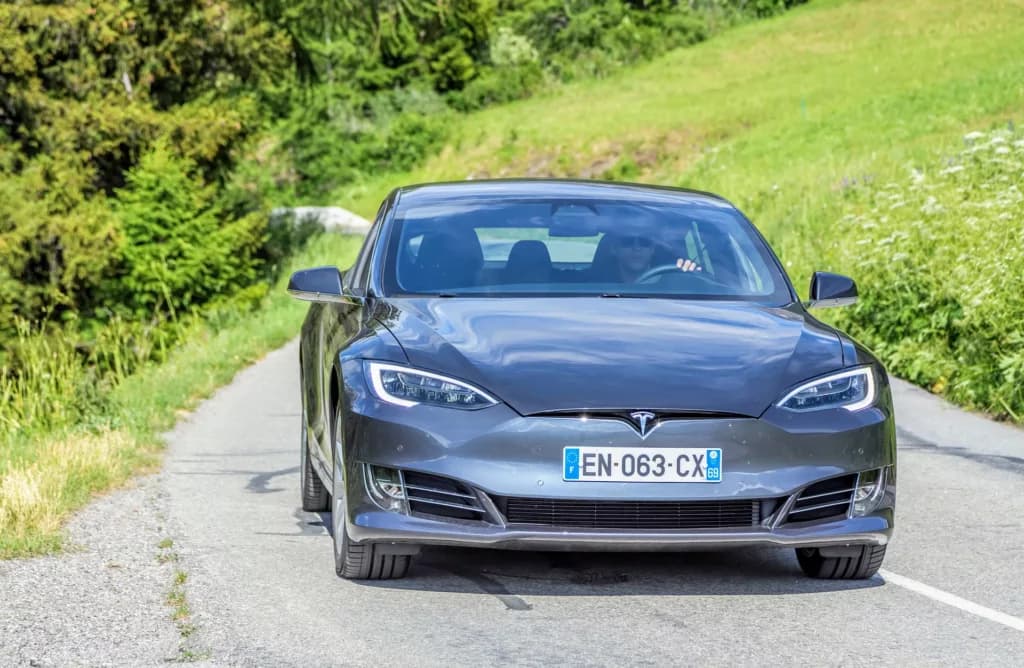
Tesla Model X surpassed roughly 650,000 km and, after a pack replacement, holds around 90% of its range (according to Electrek).
A Tesla Model S in the Tesloop fleet covered ~640,000 km in about three years; the first pack had only about 6% degradation at 320,000 km (according to CleanTechnica).
Hansjörg von Gemmingen’s record-setting Tesla Model S surpassed 2 million km; individual packs lasted 500,000–670,000 km (according to InsideEVs).
Nissan Leaf taxis (UK): one car drove 160,000 km without losing a single capacity bar, another over 280,000 km with ~70% capacity (as reported by operators, Fleet News).
And a statistic instead of fear: according to an analysis of more than 30,000 electric vehicles (Recurrent), fewer than 4% of batteries were replaced (and only ~0.3% in vehicles from 2022 onward). Mileage by itself is a poor predictor of battery health.
Does fast charging (DC) damage the battery?
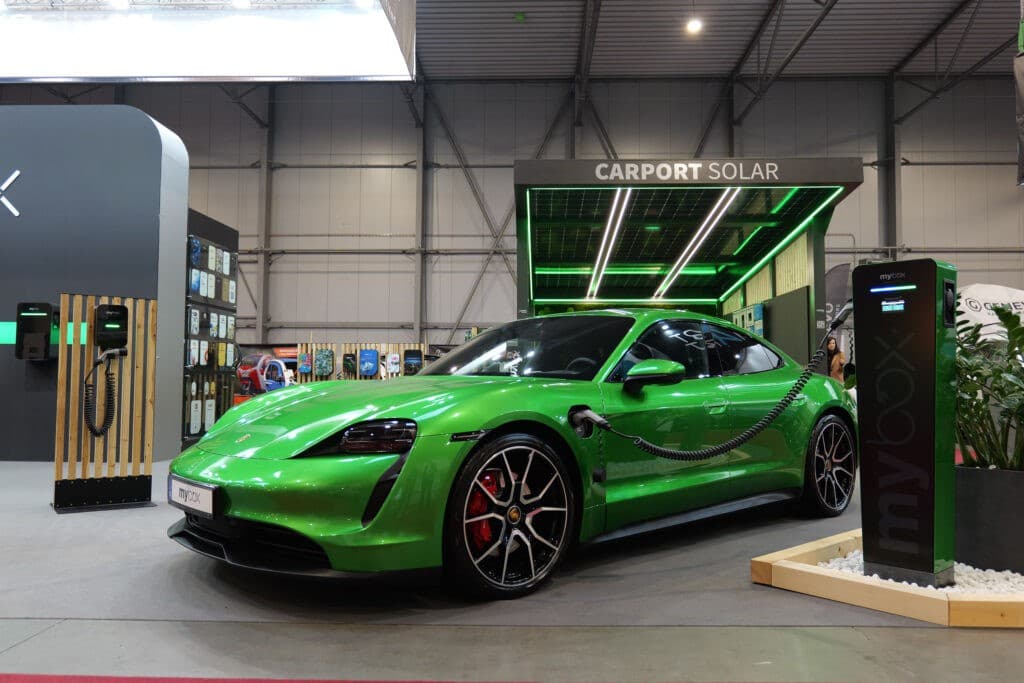
Frequent high-power fast charging increases degradation – but not catastrophically: Geotab data report around 3% per year for heavy DC users versus ~1.5% for mostly AC charging (roughly double). Even the “worst” group keeps most of its capacity. For a long battery life, the best is regular AC charging at home overnight – this is what the AC wallboxes MyBox Home and MyBox Plus with dynamic power management are for.
How to extend battery life
Don’t charge to 100% unnecessarily (for daily driving ~80% is enough) and avoid deep discharging.
Use DC fast charging mainly on trips, and charge with AC at home for everyday use.
Choose gentle, smooth AC charging with power management – more on the difference between charging methods in the article AC vs. DC charging.
Age / situation | Typical remaining capacity | What it means in practice |
|---|---|---|
New battery | 100% | Full range per the manufacturer |
8 years (end of standard warranty) | ~80–85% | Holds most of its range; end of warranty ≠ end of battery |
~20 years (projection) | ~64% | Longer than the average car; still usable for everyday driving |
Documented records | 600,000+ km | Real vehicles far beyond the lifespan of an ordinary car |
The values are based on the Geotab telematics study and documented cases; these are averages and projections, and a specific vehicle will vary depending on the model, climate, and charging method.