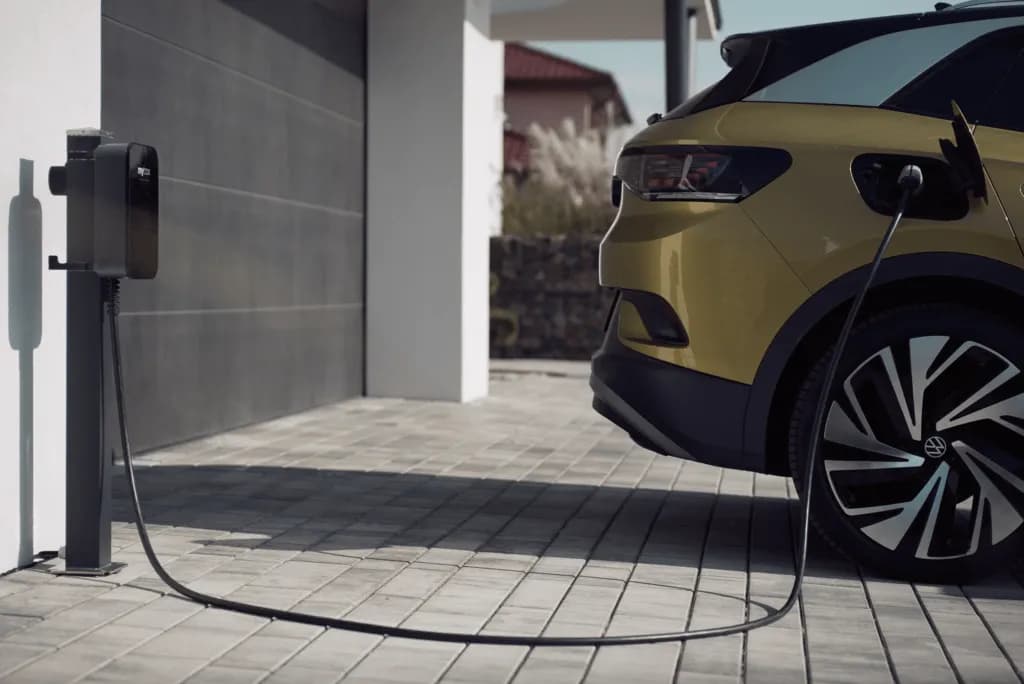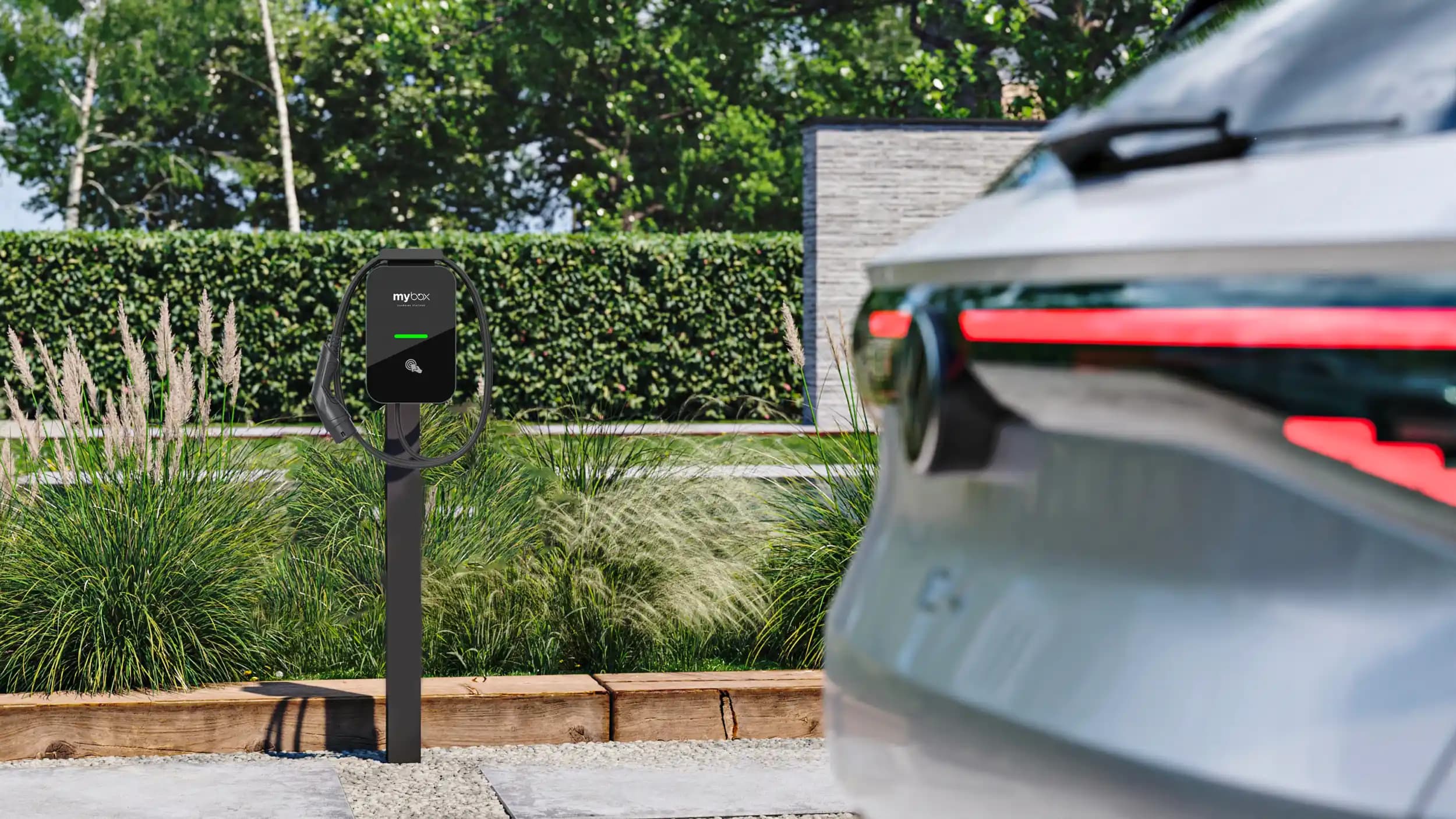
Company fleets are responsible for 74% of new vehicle emissions. The reason is obvious — nearly 6 out of 10 cars that leave the production line go straight to companies. [1] Moreover, their annual mileage is significantly higher than that of personal vehicles. An increasing number of companies are becoming aware of their environmental impact and are beginning to consider electromobility as part of their corporate philosophy. A key step towards fleet electrification is creating optimal charging infrastructure.
Corporate premises need sufficient charging points
The share of electric vehicles in company fleets is growing, and the trend will likely continue to rise. This is closely linked to the need for continuous expansion of charging points that will be available to employees and visitors within the corporate premises. However, capacity expansion can happen gradually.
Only a few Czech companies (such as SKODA) have taken a bold step towards building massive charging setups. Most have chosen a path of gradual expansion as their fleet continues to grow and electrify. These include companies like PENTA, Zentiva, GLS, and DPD, which use MyBox charging stations in their operations. More detailed information about these charging infrastructure projects can be found in our references.
Modularity and scalability for future expansion
MyBox charging stations have modular architecture and are scalable. This is an important prerequisite for the gradual expansion of charging infrastructure that will meet the changing needs of company fleets. Companies can easily respond to a growing number of electric vehicles without having to make major technical modifications.
With a modular design, companies can continuously add more charging stations or increase their output. This way, they keep pace with future technological standards and the growing demand for fast charging. If you want to gradually prepare your company fleet for electrification, choose modular systems. They will help you optimize costs and infrastructure performance according to current needs, without major interventions in the existing energy infrastructure.
Available power has its limits. Technology accounts for that
What happens when you install dozens of charging stations in an office building garage and set no power limitation rules? At full capacity, they will exceed the power allocated for the entire building. This must be prevented.
The solution lies in modern technologies led by dynamic load management (DLM) systems. These systems monitor real-time power consumption needed for the normal operation of the building. The remaining power is then directed to the charging infrastructure. Dynamic load management monitors which stations are currently in use and optimally distributes the available power among them. As a result, charging station setups operate efficiently and without the risk of excessive consumption that would jeopardize building operations.
Plan station management already during the preparation phase
When planning fleet electrification, also consider the future station management approach. As the number of charging points increases (including across different branches or multiple premises), the complexity of management and monitoring will also grow.
With MyBox charging stations, you can take advantage of remote management and cloud solutions that allow you to monitor and control all processes from a single centralized system. Remote monitoring gives technicians the ability to perform maintenance and software updates without physical intervention, minimizing downtime and increasing operational reliability.
If you are dealing with fleet electrification at your company and have any questions about charging infrastructure, contact us. We will give you individual attention and propose a solution for your fleets that meets not only current standards but also future ones.
Source: [1] Report by the European Federation for Transport and Environment; "The corporate cars problem and what Europe can do about it"