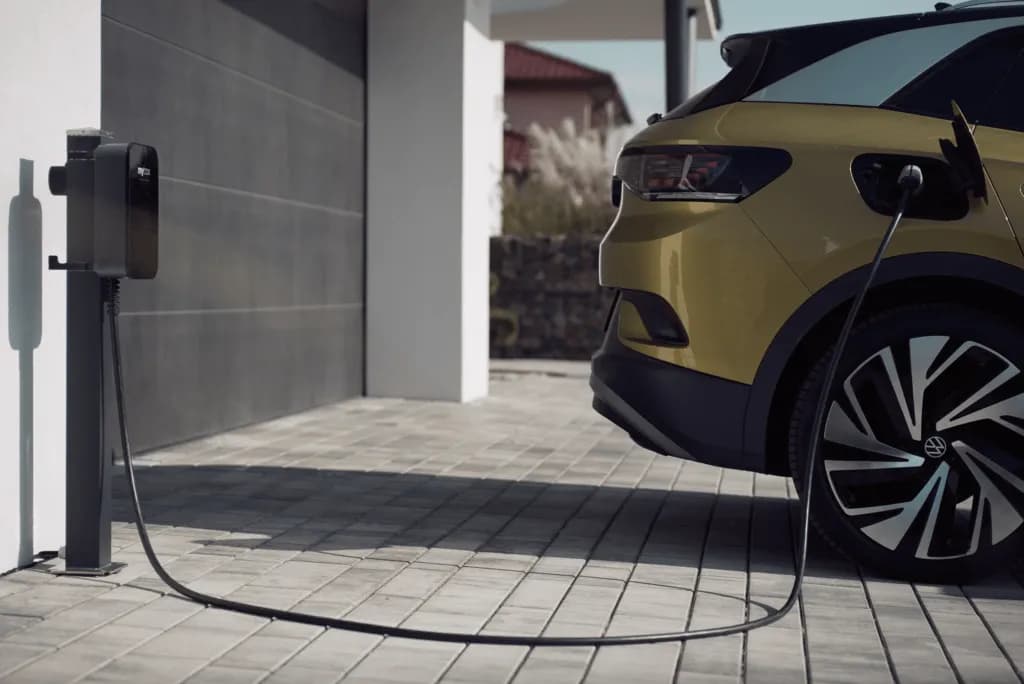
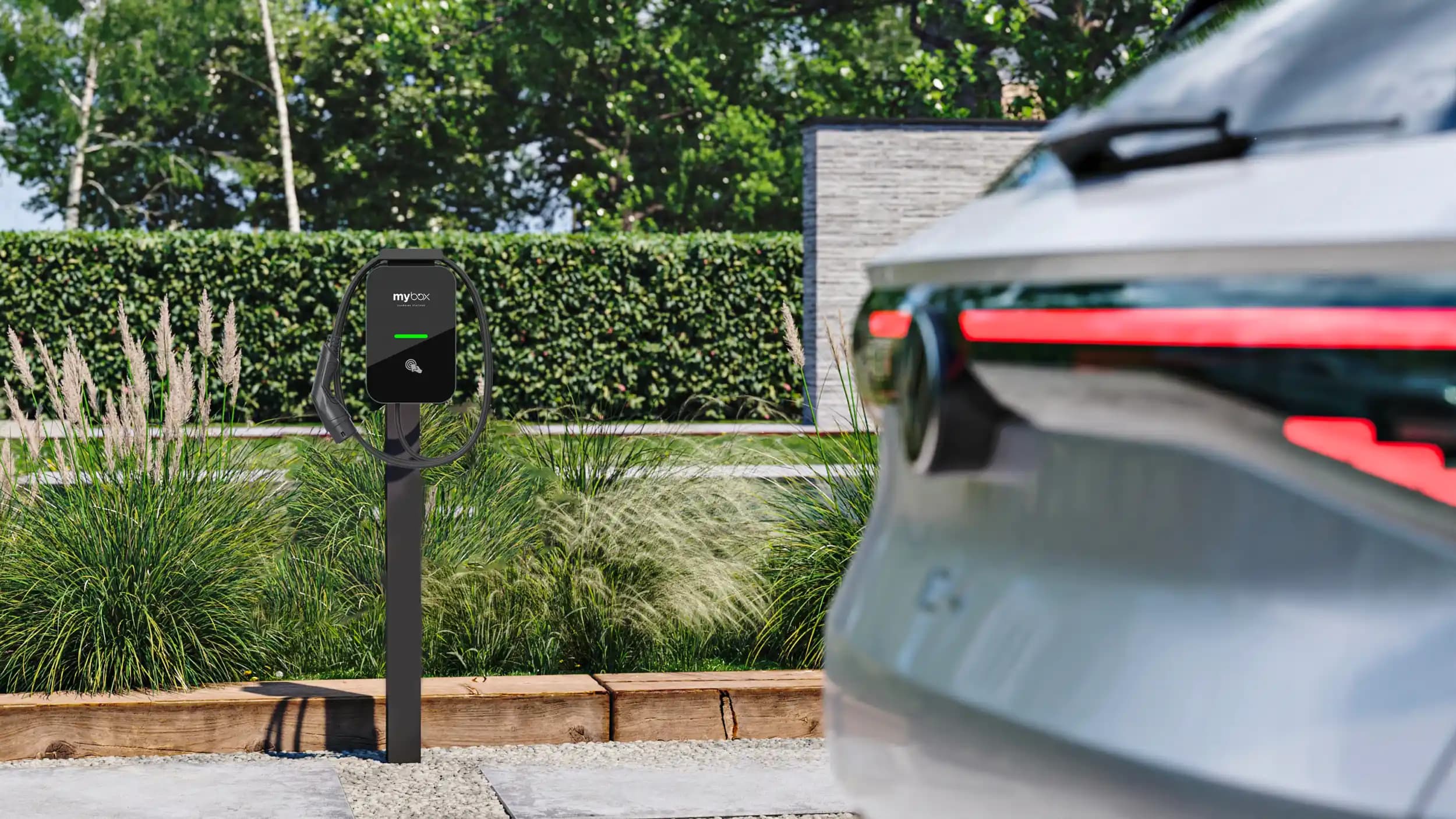
For the vast majority of Czech households, the best choice is a home charging station (wallbox) rated at 11 kW on three phases. Overnight it comfortably tops up even a large battery, fits within a standard grid connection, and needs no distributor approval. Higher power of 22 kW makes sense only in a minority of cases — and a single-phase 3.7–7.4 kW wallbox solves situations where the available power simply isn't there. This article is a comparison based on real-life 2026 scenarios: not "which is best" in general, but which is best for you.
If you are still working out what to look for step by step, we have a separate guide to choosing a home charging station. Here we go further — we compare power classes and station types against each other and give a clear recommendation.
11 vs 22 kW: what the numbers really mean
A wallbox's power output determines how much energy the car receives per hour. For alternating-current (AC) charging, what matters is the number of phases and the current per phase:
3.7 kW = 1 phase, 16 A — the slowest, but it works even where available power is low.
7.4 kW = 1 phase, 32 A — a compromise for flats and weaker connections.
11 kW = 3 phases, 16 A — the "gold standard" of home charging.
22 kW = 3 phases, 32 A — the fastest AC, but the most demanding on the connection.
The key point is that the speed of home charging is ultimately limited by your car anyway. Many EVs have an on-board AC charger rated at only 11 kW (often just 7.4 kW), so a 22 kW wallbox still charges them at eleven. Higher power is really used only by cars with a 22 kW on-board charger (e.g. some Renault, Smart, Tesla with the matching equipment). Before you go for 22 kW on the wall, check the maximum AC power of your specific car — otherwise you pay for speed you won't get.
The second practical limit is the overnight maths. An 11 kW wallbox delivers roughly 80–88 kWh over 8 hours of an off-peak tariff — more than the battery capacity of most EVs. An 11 kW wallbox charges a 50 kWh battery in about 4.5 hours, and a 70 kWh one in just under 7 hours. For everyday commuting, 11 kW therefore means you always set off in the morning with a full battery.
When 11 kW, when 22 kW and when single-phase (flat vs. house)
Family house with a standard connection (3×20 A / 3×25 A): 11 kW. An 11 kW wallbox on a 3×16 A breaker is handled by most households without modifications. It is the best balance of speed, cost and safety.
Want 22 kW: factor in the distributor. For 22 kW you need 32 A per phase, a dedicated circuit with a 3×32 A breaker, and a main breaker of up to 3×40 A. Above 11 kW (11 kVA) you also need the consent of the distribution system operator (ČEZ Distribuce, EG.D, PRE distribuce) and often an increase of the reserved capacity — which raises both the investment and the monthly breaker charge. It makes sense mainly where you already have a strong connection, a car with a 22 kW charger, and want fast charging during the day too.
Flat in an apartment block / weak connection: single-phase 3.7–7.4 kW. Where the available power is limited (typical for flats), 7.4 kW (1 phase, 32 A) is often the only realistic option. Installation in an apartment building also requires the owners' association (SVJ) consent and frequently smart control so the building isn't overloaded — more in the article on home, business and public stations: how they differ.
Note: if you are only considering an extension lead into an ordinary socket, read why that is a bad idea in can I use an ordinary socket at home to charge.
Power-class comparison table
Parameter | 3.7 kW (1ph) | 7.4 kW (1ph) | 11 kW (3ph) | 22 kW (3ph) |
|---|---|---|---|---|
Current / phase | 16 A | 32 A | 3×16 A | 3×32 A |
Time to charge ~60 kWh | ~16 h | ~8 h | ~5.5 h | ~3 h (22 kW car only) |
Distributor consent | no | no | no (up to 11 kW) | yes |
Suitable for | flat, weak connection | flat, compromise | family house | strong connection + 22 kW car |
Typical limit | available power | available power | ideal balance | car's on-board charger |
How to choose a home wallbox (criteria)
Power is only the start. These parameters decide whether you'll be happy for years:
Tethered cable vs. Type 2 socket. A wallbox with a fixed cable is more convenient — you park and plug straight in. The Type 2 socket version is more flexible (swap the cable, lend it out). For a household the fixed cable usually wins.
App and dynamic load management (DLM). A smart station ensures charging doesn't overload the house breaker and can adapt the power to the home's consumption. We explain separately how dynamic load management (DLM) works.
Working with photovoltaics. If you have a PV system, you want a wallbox that can charge from surplus.
RFID authorisation. Useful even at home if you share the station or want to separate charging. In detail in the article on the RFID reader.
MID energy meter. A certified meter enables precise billing — crucial when you have your charging reimbursed by your employer. We explain why it pays off in why a certified energy meter when it costs more.
Ingress protection (IP) and outdoor use. For a façade installation look for at least IP54.
Recommendations by household type
Family house, one EV, overnight charging. A three-phase 11 kW station with a fixed cable, app, DLM and IP54 rating. This is exactly the category of MyBox Home — 11 kW, IP54, RFID, a mobile app and dynamic load management, with the option to charge from photovoltaic surplus.
You need precise billing (company reimbursement, sharing costs). Reach for a station with a MID energy meter. That is the domain of the MyBox Plus model, which adds certified consumption metering — ideal when you charge a company car at home and need documentation for reimbursement. If you are hesitating precisely between Home and Plus, we have a direct comparison in MyBox Home vs Plus: differences and tips.
Flat in an apartment building. Start by verifying the available power and the SVJ (owners' association) consent; you often end up with a single-phase variant with smart control. The real-world installation at SVJ Trnkovo náměstí offers inspiration too.
You'll find the whole AC station portfolio on the AC charging stations overview, and the wider context on the charging stations pillar page.
Price and subsidies 2026
The connection (installation) of a station starts at roughly CZK 5,000 (about EUR 200); the final price then depends on the chosen wallbox, the cable run and smart functions. Add a possible capacity increase if you go for 22 kW.
Among subsidies, the relevant one is Nová zelená úsporám (the Czech "New Green Savings" programme): a charging point for a family house can be funded, but in the 2026 programme only as part of a photovoltaic installation — you cannot get a subsidy for the wallbox on its own. From 2026, direct subsidies go mainly to low-income households, while others draw an interest-free loan. Verify the current amount and conditions directly on the programme website before buying — the rules change during the year.
Quick decision summary: family house → 11 kW; need for billing → 11 kW with a MID energy meter; weak connection or flat → single-phase 7.4 kW; 22 kW only with a car that can use it, and with distributor consent.
Frequently asked questions
Is an 11 kW or a 22 kW wallbox better for a household?
For most Czech households 11 kW on three phases is best. It charges even a large battery overnight, fits a standard 3×20–25 A connection and needs no distributor consent. 22 kW makes sense only if you have a strong connection and a car with a 22 kW on-board AC charger — otherwise you won't use the speed anyway.
Do I need distributor consent for a home wallbox?
Up to 11 kW, usually no. Above 11 kW (i.e. for a 22 kW wallbox) the consent of the distribution system operator (ČEZ Distribuce, EG.D, PRE) is required and you often also need to increase the reserved capacity and strengthen protection to 3×32 A. This raises both the purchase costs and the monthly breaker charge.
Is a single-phase 7.4 kW wallbox enough for home charging?
For a flat or a house with a weaker connection, yes. 7.4 kW (1 phase, 32 A) adds roughly 60 kWh overnight, which covers normal commuting. It is a practical choice where three phases can't be used or there isn't enough available power. For a family house with a standard connection, however, 11 kW on three phases is better.
Which criteria besides power matter most for a home wallbox?
Fixed cable vs. Type 2 socket, a mobile app and dynamic load management (DLM), working with photovoltaics, RFID authorisation, a certified MID energy meter for billing, and ingress protection of at least IP54 for outdoor mounting. For a household, an 11 kW station with a fixed cable, app and DLM usually wins.
When is a wallbox with a MID energy meter worth it?
When you need to document consumption precisely — typically when your employer reimburses the charging of a company car, or when sharing costs in a household or owners' association. A certified MID energy meter provides measurement valid for invoicing. This feature is offered, for example, by MyBox Plus.