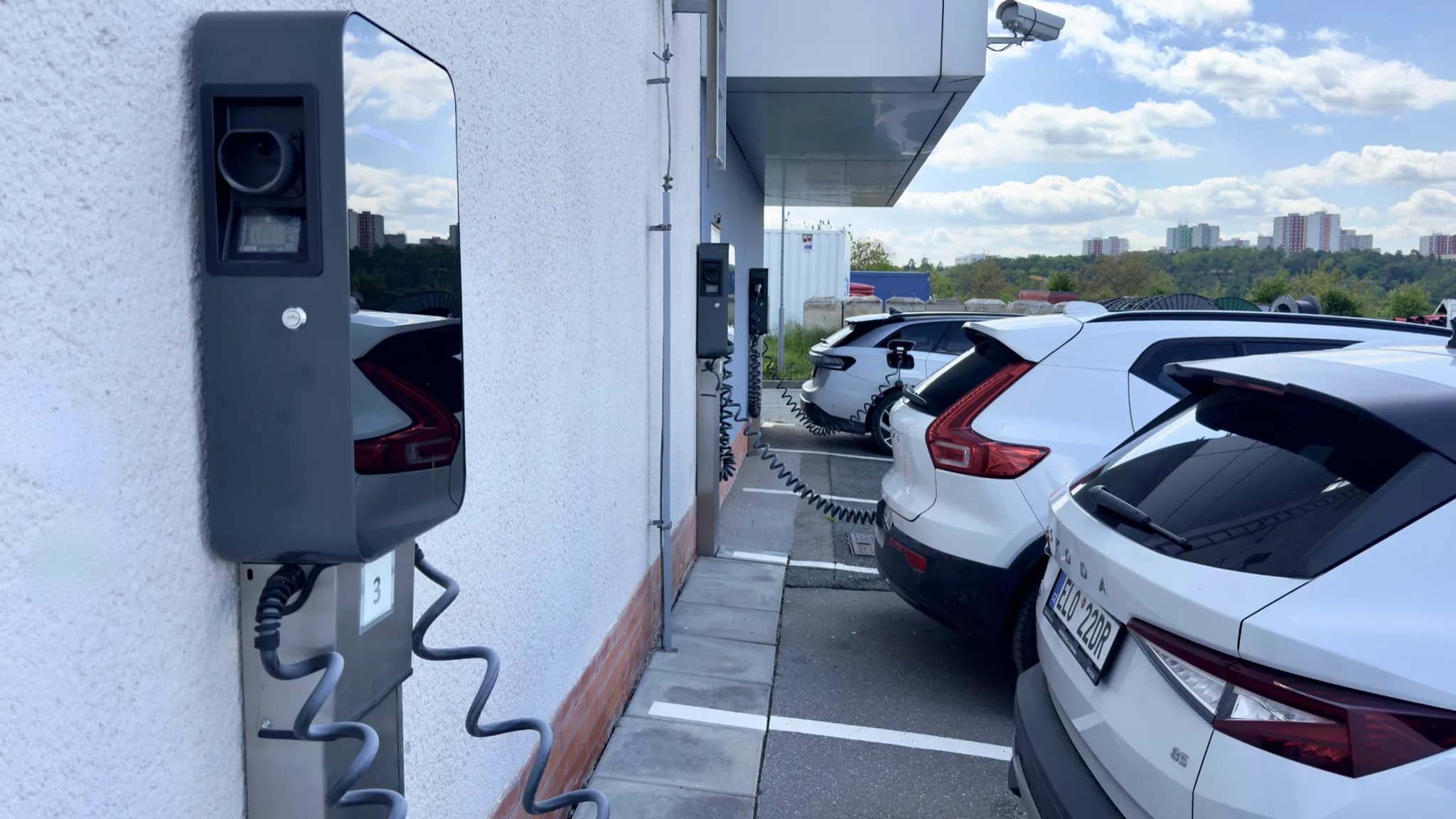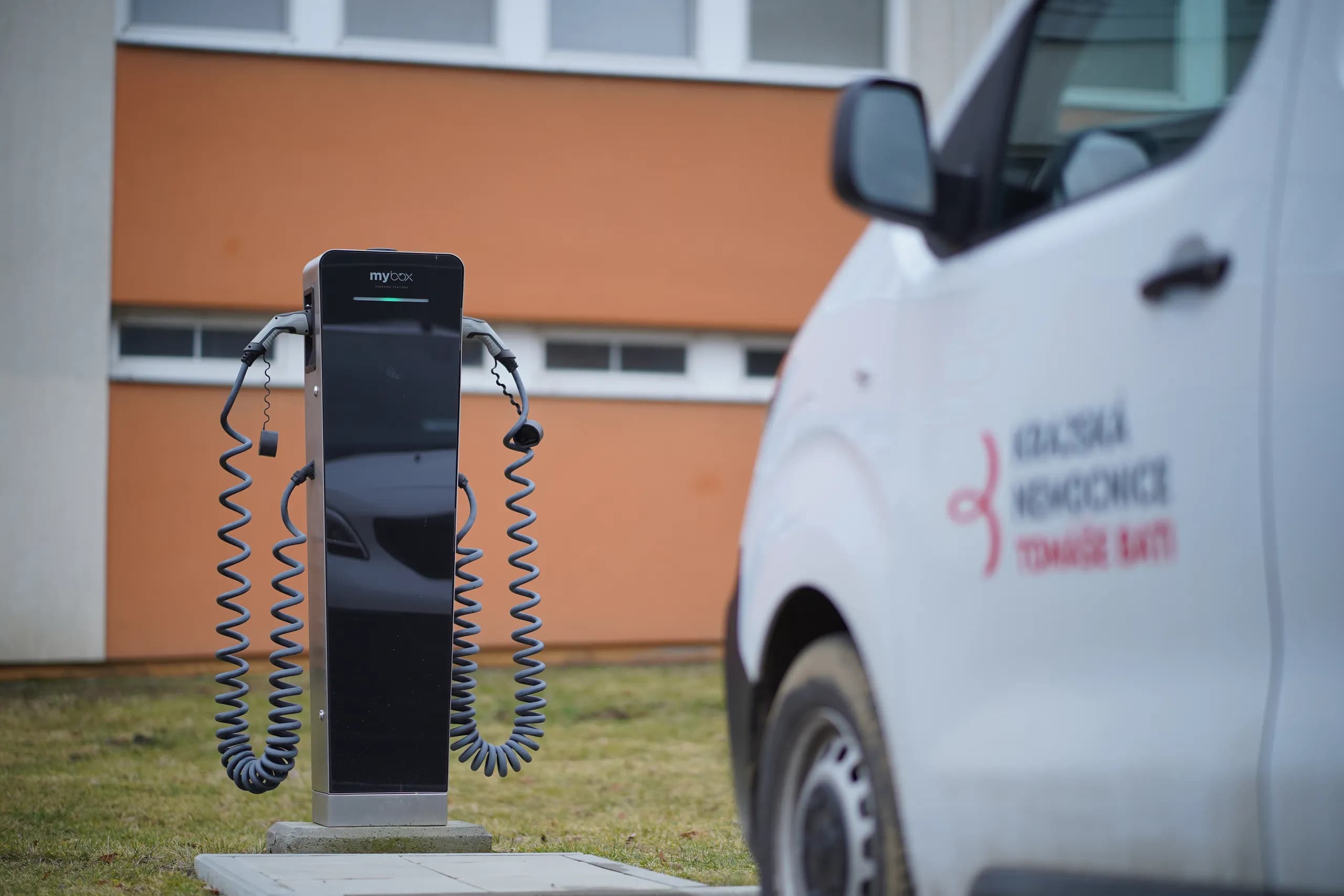
As part of the long-term modernization of its campus, the Tomáš Baťa Regional Hospital in Zlín (KNTB) decided to deploy EV charging infrastructure. The step is part of a broader development concept for the hospital that reflects the demand for greener and more cost-effective operation. The hospital chose MyBox charging stations, whose design matches the needs of campus operations.
Project brief
The hospital’s main motivation was the shift to cleaner, more economical operation while preparing for upcoming regulatory requirements. The project was not seen as a one-off investment but as part of the long-term development and modernization of the campus. The goal was to introduce a functional charging solution that would not restrict day-to-day operations and would remain easy to manage.
The implemented solution
Three MyBox POST charging stations with integrated cables were installed across the hospital campus, each able to charge two vehicles simultaneously at a single point. The three AC POST stations rated at 2× 22 kW make it possible to charge up to six vehicles at once. The chosen power level is an optimal compromise between charging speed and efficient use within hospital operations.
Operation and how the system works
The charging infrastructure is adapted to the specific regime of the hospital, where vehicles make frequent short trips around the campus. Charging takes place mainly after shifts end – especially for maintenance vehicles – when the vehicles are not in active use.
This approach ensures there are no conflicts or waiting for a charge and the whole system runs smoothly. The solution also includes a data connection to the internal control system and charging management. After the initial integration phase, the system has been running stably and without complications.
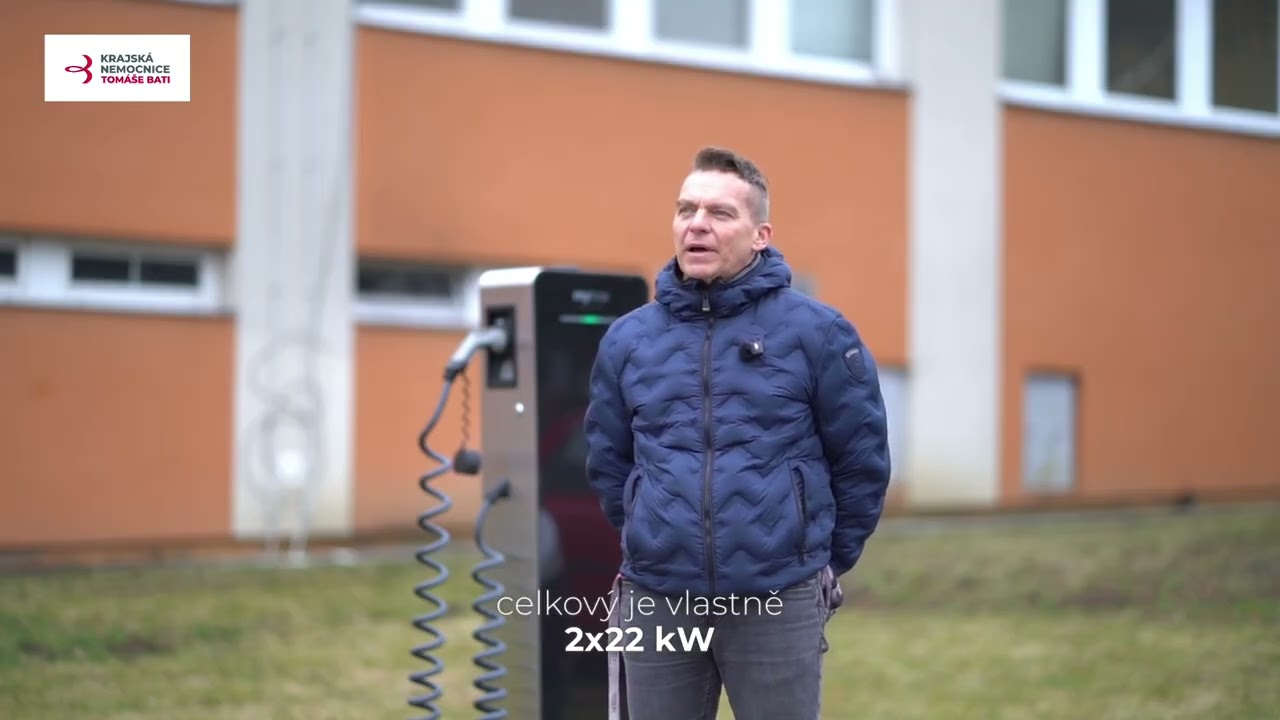
Video from the installation
See the MyBox POST charging stations in operation on the KNTB campus:
Key elements of the solution
3× AC MyBox POST charging stations (2× 22 kW)
charging of up to 6 vehicles at the same time
integrated cables for simple handling
charging organized around work shifts
connection to a dispatch and monitoring system
Project benefits
Above all, the implemented solution provides stable support for operations without any negative impact on the running of the hospital. Thanks to shift-based charging, the infrastructure is used efficiently and without unnecessary downtime. The main benefits include in particular:
smooth operation with no waiting to charge
low maintenance requirements (only routine inspections and supervision)
system reliability without the need for major interventions
an overview of consumption and costs, including reporting
The solution also proves suitable for operations with frequent short trips, for example in maintenance or supply.
Conclusion
The deployment of charging infrastructure at the Tomáš Baťa Regional Hospital in Zlín represents a functional, proven solution that meets the specific requirements of hospital operations. The installation of three AC charging stations rated at 2× 22 kW enables efficient charging of up to six vehicles at once without limiting operations. The hospital’s future plans include further expansion, including potential use for employees and patients.
The project confirms that e-mobility is a suitable solution for campus operations too, where it brings both economic and operational advantages.
Considering a similar solution?
Looking for reliable charging for businesses or fleets? Take a look at the MyBox POST charging station, or get inspired by our guide on how to choose an EV charger for your company. Don’t forget the current EV charging subsidies either.
Frequently asked questions
What charging stations are installed at KNTB Zlín?
Three AC MyBox POST charging stations rated at 2× 22 kW with integrated cables, which make it possible to charge up to six vehicles at once.
How many vehicles can be charged at the same time?
Up to six. Each of the three POST stations charges two vehicles at once, for six vehicles in total across the campus.
How is the hospital fleet charging organized?
Charging takes place mainly after shifts end, when vehicles are not in active use. The system is connected to a dispatch and monitoring system, so there are no conflicts or waiting.